
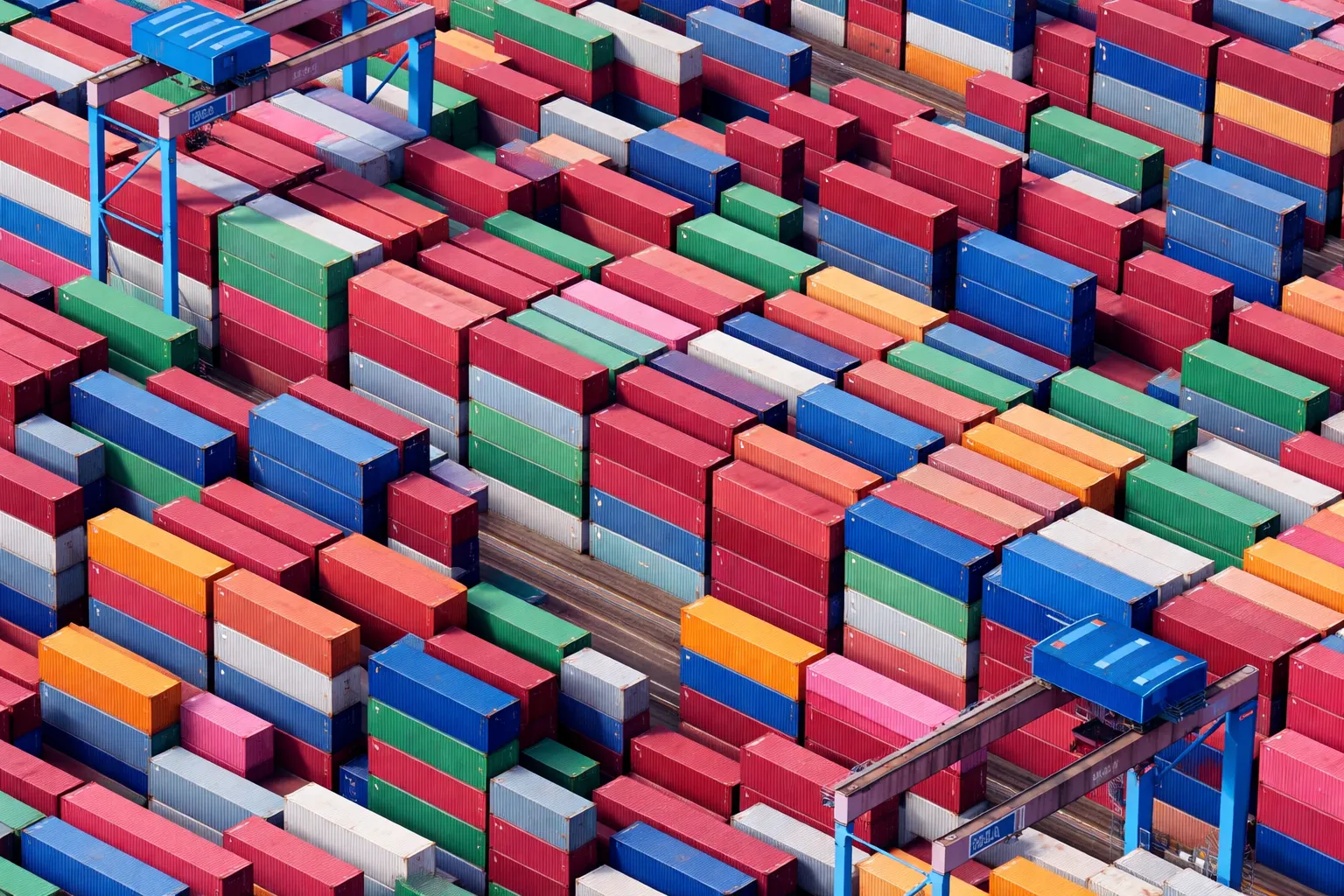
Aerial view of stacked shipping containers in a container yard
Solutions Industries Container loading
Packing, Loading & Stowage

Plan container loading reliably

Higher loading efficiency, robust loading plans, and better sea-container utilization with software for 3D packing and stowage planning.

Container loading is much more than a pure space problem. Volume, weights, stackability, sequence, and operational conditions all need to fit together. Our software helps teams plan container loading systematically, generate realistic recommendations, and use available space more effectively.

We combine strong 3D packing optimization with real logistics requirements so the resulting loading plans do not just look good mathematically, but hold up in operational execution and container stowage practice.

What strong stowage planning must deliver

Optimize space usage, load distribution, and stability together

Plan loading sequence and floor execution early

Standardize container stowage instead of improvising manually

Load containers optimally

Economical and operationally feasible instead of only mathematically dense

A container is not automatically well loaded just because the maximum number of packages fits mathematically. Good container loading means using cargo space efficiently while ensuring that the loading operation works on the floor, loads stay balanced, and fragile or limited-stack goods are treated correctly.

In practice, the real quality appears where container loading, stowage planning, and downstream processes are modeled together. That is exactly what our software supports with one robust planning model.

Volume, weights, and stackability must be evaluated together

Orientations, overhangs, and support areas determine real packability

Loading sequence and practical feasibility on the floor belong inside good stowage planning

Heterogeneous items and changing shipment structures increase complexity sharply

Rules for specific product groups need to be enforced consistently and reproducibly

Container stowage should not remain a manual search process under high time pressure

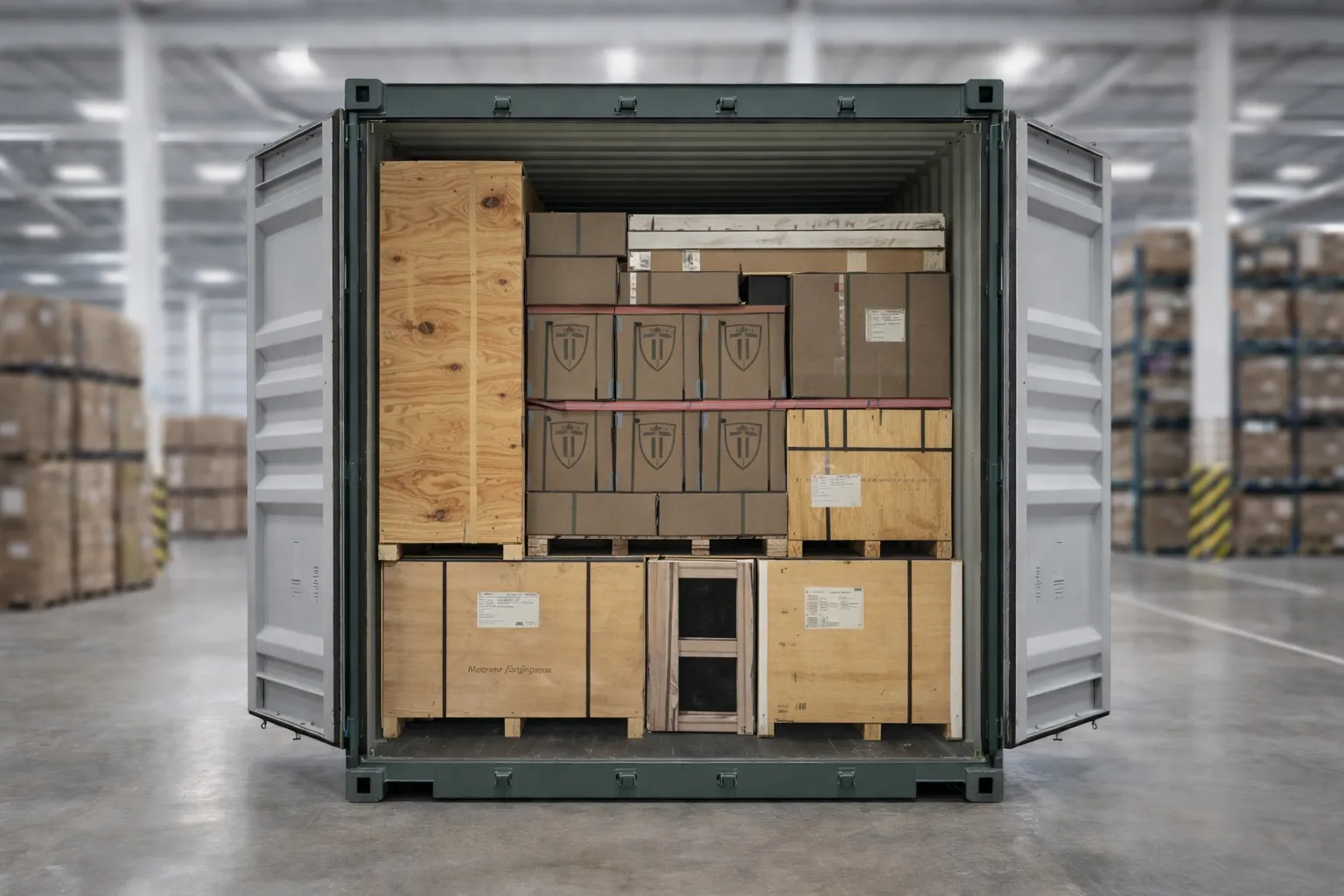
Loaded sea container standing on a platform before closing
Typical challenges

Where container loading gets expensive without structure

In daily operations, companies keep running into the same container-loading questions. The key is to treat them as a structured optimization problem rather than as isolated one-off cases.

Use cargo space efficiently without ignoring execution

A container is not well loaded just because it contains the maximum number of packages mathematically. Good container loading means using space well while ensuring that the loading operation works on the floor, weights are distributed sensibly, and fragile or limited-stack goods are handled correctly.
Protect weight distribution and stability

In ocean freight, pure volume planning is not enough. Heavy goods need to be positioned so the load remains stable, critical centers of gravity are avoided, and handling and securing stay practical.

Enforce stackability and orientation rules consistently

Not every package can stand on every other package. Some goods must not be rotated, while others may only travel in one specific orientation. Those rules need to be modeled directly in stowage planning instead of checked manually afterward.

Make repeatable decisions under time pressure

Daily operations face the same core question over and over: how can the available space be used best without creating operational risk? Without systematic support, container loading becomes a search process with high effort, low transparency, and strong dependence on individual experience.

Handle heterogeneous shipments and changing constraints

Different package types, varying shipment structures, handling requirements, and product-specific restrictions make planning complex. Good stowage planning needs to represent that reality cleanly.

Turn container loading into a scalable process

Companies should not rely on isolated know-how, experience, or repeated manual attempts. The target is a traceable, standardized, and integrable planning process that prepares loading decisions consistently for operations.

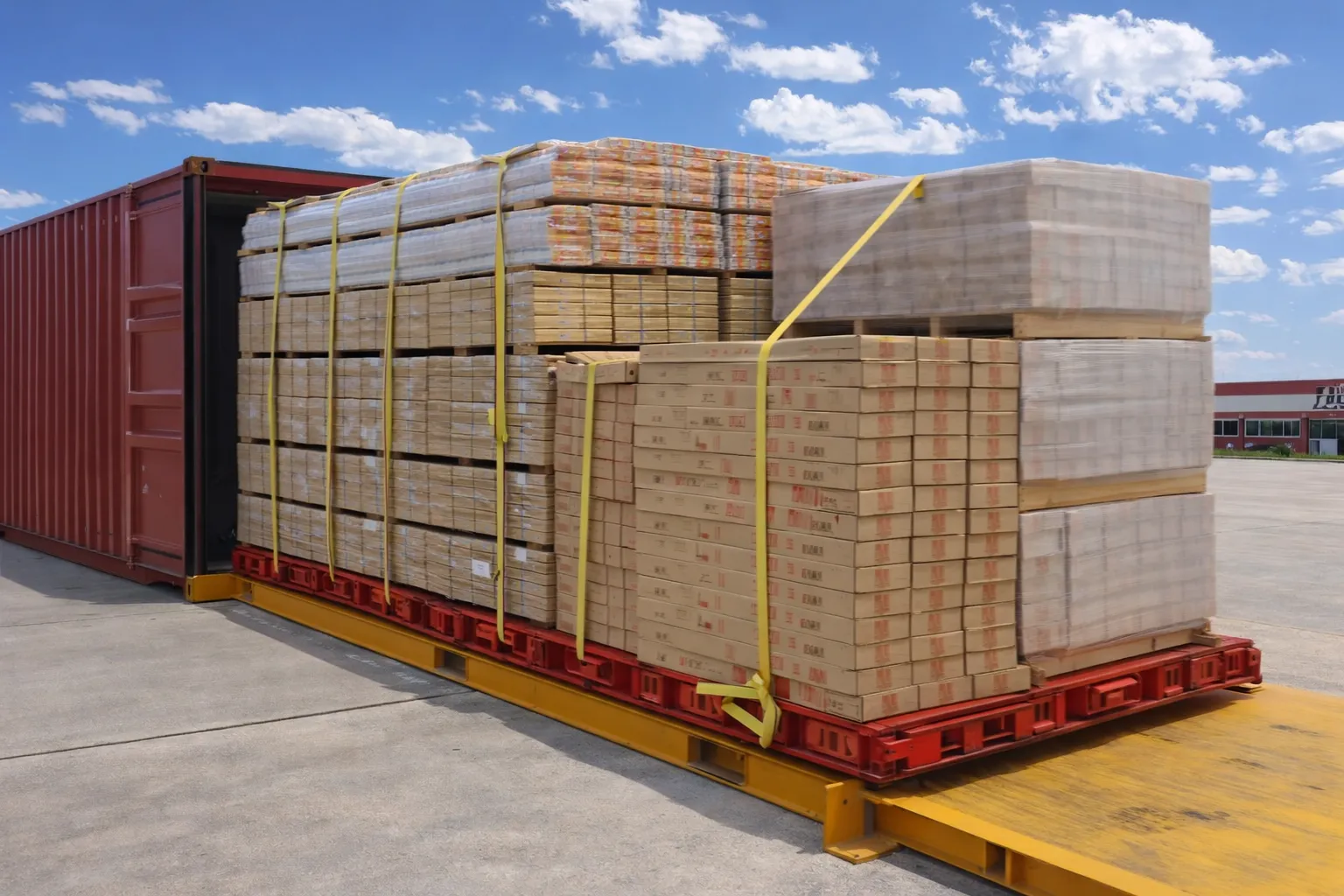
Open sea container packed with crates and cartons
Our solution for container loading

What our software handles across loading, stowage, and handoff

Our software computes container loading plans from real item and shipment data. In addition to dimensions and weights, stacking rules, allowed orientations, priorities, sequences, and further restrictions can be modeled directly inside optimization.

On that basis, the system generates structured recommendations that are economical and operationally robust. Container loading becomes a traceable and scalable process instead of a manual exception workflow.

3D load planning for sea containers

Our software determines robust loading patterns based on the actual geometry of the shipment. That allows different package types, formats, and load carriers to be combined in one consistent 3D loading plan.

Rule-based packing optimization

Loading decisions are not made only by volume, but by explicit rule sets. These include stackability, no-rotation rules, exclusion relations, minimum support areas, or customer-specific packing constraints.

Weight and load-distribution logic

Strong container loading needs more than space utilization. Weight and weight distribution are central to stability, handling, and feasibility, and our solution models them structurally in the loading plan.

Loading-sequence planning

Not only the end result matters, but the path to get there. The software can structure loading plans so the actual loading sequence on the floor is considered and execution stays efficient.

Visualization and transparency

Loading plans are visualized clearly so planning, alignment, and operational execution remain understandable. That improves communication between dispatch, warehouse, shipping, and other stakeholders.

Integration into existing processes

Our solution integrates with ERP, warehouse, shipping, or transport-management processes. Container loading is therefore treated as part of a continuous logistics planning process instead of an isolated stand-alone step.

Relevant requirements

Which restrictions typically decide whether container loading works

In ocean freight, it is not enough to look only at geometric packability. Different operational and technical requirements need to work together so stowage remains stable, safe, and executable.

Our software makes it possible to represent those requirements systematically during planning instead of checking or correcting them manually after the fact.

Typical constraints for robust stowage planning

Weight distribution to avoid critical centers of gravity
Stackability and allowed support areas between packages
No-rotation rules and orientation-dependent transport constraints
Free spaces and stowage quality for stability and handling
Loading sequence for loading and unloading in multi-step processes
Customer-specific rules for product groups and packing patterns
Fragile or limited-stack goods that need extra protection
Priorities for individual shipments or loading units
Links to shipping, export, and ocean-freight planning
Standardized checks instead of late manual rework
Your benefits

More utilization, more transparency, and more planning reliability

Intelligent container loading creates the foundation for more efficient and more reliable processes in shipping, export, and ocean-freight planning. Decisions become more traceable, less dependent on individual expertise, and easier to reproduce.

Loading plans are based on real operating conditions instead of theoretical ideal states. That improves practical feasibility on the floor and reduces later adjustments.

Benefit 1

Better use of available space in each container

Benefit 2

Less manual planning effort through automated loading recommendations

Benefit 3

More traceable and reproducible loading decisions

Benefit 4

Higher operational quality under real loading conditions

Benefit 5

Fewer last-minute adjustments on the floor

Benefit 6

More transparency between planning, warehouse, shipping, and export

Benefit 7

More planning reliability in shipping, export, and ocean freight

Benefit 8

Scalable container stowage instead of person-dependent workarounds

Who this solution is for

Especially relevant for companies with recurring container planning

Industrial and manufacturing companies

For companies with recurring export flows where container loading needs to be prepared economically and in a standardized way.

Logistics providers and forwarders

For providers that plan, stow, or dispatch containers regularly across different customer environments.

Export and shipping departments

For teams that need to prepare robust loading decisions and hand them over directly to warehouse or loading teams.

Contract logistics and fulfillment

For operating environments with changing items, heterogeneous packages, and customer-specific loading restrictions.

Companies with a strong ocean-freight or intermodal share

Especially valuable wherever container loading is not occasional, but a recurring planning task at meaningful scale.

Typical scenarios

Where container loading creates the most leverage

Our solution fits a wide range of settings, from standardized export flows to daily operational planning under time pressure.

Standardized export flows

Recurring shipment structures can be planned more efficiently with robust packing patterns and standardized rules.

Complex mixed shipments

Varying package types, different restrictions, and changing loading patterns require flexible, rule-based stowage planning.

Early planning in sales and quotation phases

Even early on, teams can estimate how many containers are needed, which loading pattern makes economic sense, and how scenarios affect utilization and planning reliability.

Daily operational planning

Under time pressure, the solution helps teams make robust loading decisions and hand them over directly to warehouse or shipping execution.

Why work with us

Container loading as part of one continuous logistics planning process

We combine transport-optimization expertise with strong 3D packing technology. That means we do not view container loading in isolation, but as part of a continuous logistics planning process. The result is a solution that is mathematically strong, operationally realistic, and technically integrable.

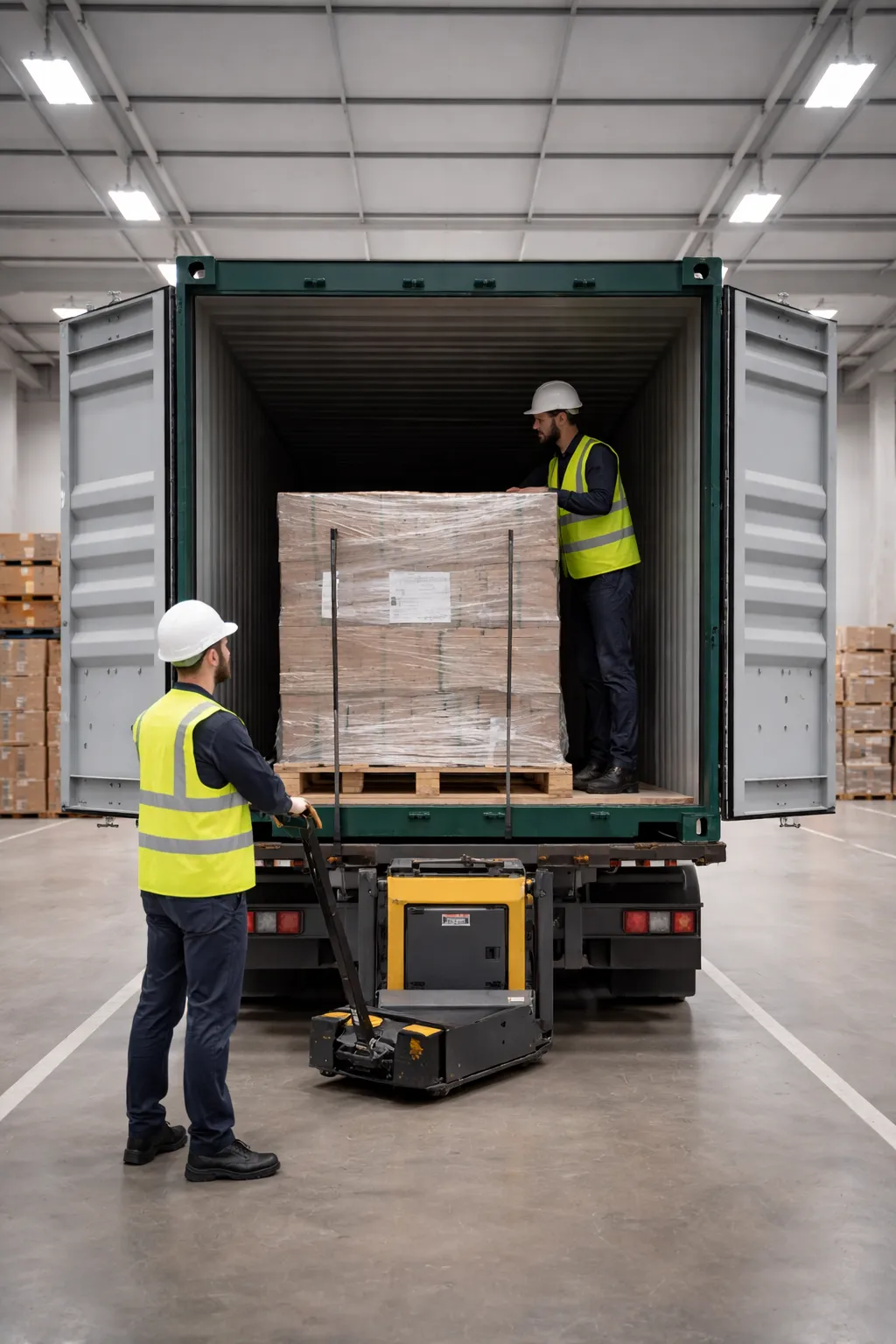
Workers loading a wrapped pallet into a shipping container

Robust loading decisions

If you want to improve container utilization, reduce planning effort, and standardize loading decisions, we can show how intelligent software makes container loading measurably better.

Plan container loading more efficiently

We can show how complex stowage planning becomes a stable standard process

If container loading needs to work not just on paper but also in real operations, it requires a solution that models geometry, weights, rules, sequence, and integration requirements together.

Request a demo

If you want to improve container utilization, reduce planning effort, and standardize loading decisions, we can show how container loading becomes measurably more reliable with intelligent software.