Hardware and DIY retail logistics with mixed goods and complex delivery structures
Solutions Industries Hardware and DIY retail
Hardware and DIY retail

Transport optimization for hardware and DIY retail

In hardware and DIY retail, broad assortments meet demanding logistics. Our software brings parcel freight, bulky goods, long goods, building materials, palletized freight, and store-based processes together in one shared planning logic.

It helps you plan transport economically, use resources efficiently, and keep delivery promises reliably. For delivery processes involving heavy, bulky, and mixed goods, from the order to the fully loaded route.

Why this industry is different

Mixed orders of parcel freight, bulky goods, building materials, and pallets within one route logic

Store delivery, home delivery, and direct shipping with different service levels

Robust planning only becomes possible through shipment building, loading units, and 3D load-space checks

Introduction

Logistics in hardware and DIY retail is more than route planning

Hardware and DIY retail places special demands on transport and dispatch. Unlike in standardized parcel networks, very different product characteristics, shipping methods, and service levels all have to be considered at the same time. Orders often consist of mixed baskets whose weight, dimensions, loadability, and delivery requirements differ substantially.

At the same time, consumers and trade customers expect reliable delivery dates, transparent processes, and flexible delivery options. On top of that come stores as logistics nodes, pickup models, stock transfers, regional availability, and frequent short-notice changes in operational planning.

That is exactly where our software comes in: it connects dispatch, route optimization, and load planning into one end-to-end planning process for hardware and DIY retail.

Mixed baskets of parcel goods, bulky items, long goods, building materials, and palletized freight

Store delivery, home delivery, store replenishment, and direct shipping in one shared planning logic

Different service levels from scheduled delivery to two-person handling

Loadability, geometry, weight, and unloading sequence are all highly relevant

Short-notice operational changes caused by availability, backorders, and returns

End-to-end planning from order intake to the loaded route

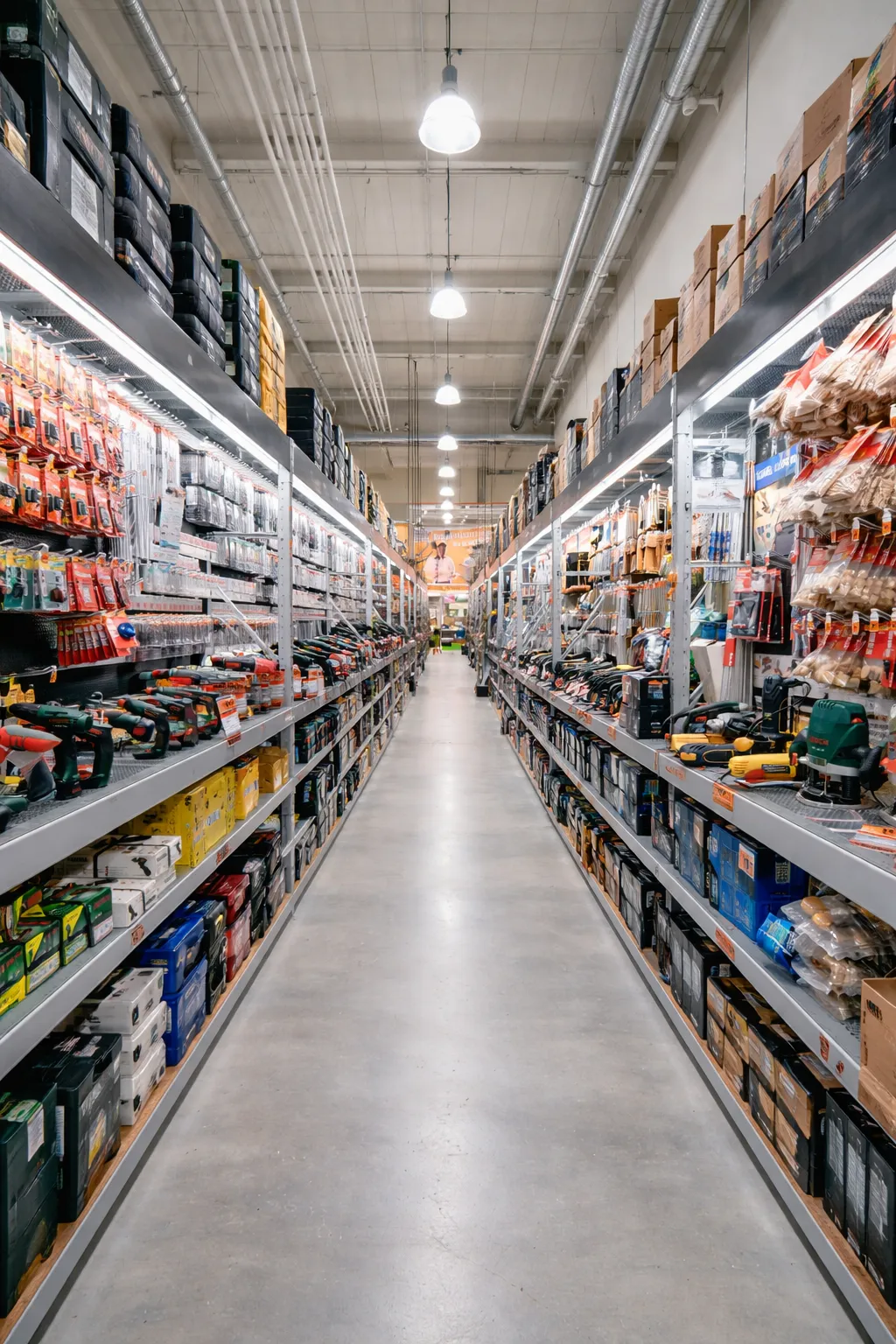
Hardware and DIY retail logistics with different item types and delivery requirements
Challenges in hardware and DIY retail

Typical requirements in transport planning

Anyone planning delivery processes in hardware and DIY retail has to consider far more than stop sequencing and driving times. In practice, the challenge is to manage a complex transport structure with many dependencies.

01

Mixed order structures

In hardware and DIY retail, parcel-capable items, bulky goods, long goods, building materials, and palletized freight often come together in a single order. That heterogeneity has to be turned into a robust shipping and transport structure before actual route planning even begins.
02

Different delivery and service requirements

Home delivery, store replenishment, direct shipping, curbside delivery, carry-in service, and two-person handling all follow different operational rules. To plan economically, these service levels need to be treated as real dispatch criteria.

03

Operational loading and vehicle constraints

Heavy, bulky, and non-stackable products cannot be represented reliably through unit counts or total weight alone. What matters are real loading units, vehicle types, handling equipment, weight distribution, and 3D loading-space constraints.

04

High operational dynamics

Inventory changes, partial deliveries, backorders, returns, and regional availability often change the plan at short notice. Robust transport processes therefore need a planning logic that still works under real day-to-day conditions.

Standard tools often capture that reality only partially. Economical and operationally robust processes require planning that treats product structure, transport logic, and loading space as one connected problem.

Planning hardware and DIY retail transports with robust loading units and routes
Our solution

Transport optimization for complex goods flows in hardware and DIY retail

Our software was built for transport structures in which orders cannot simply be distributed, but have to be assembled correctly from a logistics perspective. It helps hardware-store chains, DIY retailers, retail logistics providers, and forwarding partners turn complex orders systematically into transport-ready units and then plan operationally sound and efficient routes from them.

That means we do not start only once the final delivery is already defined, but much earlier in the process.

Planning logic

From order to route

In hardware and DIY retail, planning quality is decided before route optimization itself even starts. That is why our software models the relevant planning steps in the right sequence.

1. Shipment building

Turn order lines into transport-ready shipments

Items are evaluated not just commercially, but logistically. Dimensions, weight, damage risk, stackability, service requirements, delivery date, goods origin, and delivery address determine which order lines can be transported together in a sensible way.

2. Pallet building

Structure loading units realistically

After shipment building, pallets, handling aids, and other transport units are formed while considering footprint, height, weight, overhang, stacking rules, compatibility, and item-specific constraints.

3. Route planning

Dispatch transport structures economically

Based on robust shipment and pallet structures, the software optimizes time windows, service levels, vehicle types, driver qualifications, handling equipment, and store, warehouse, and regional constraints into operationally viable routes.

4. 3D load planning

Validate geometry and unloading logic directly

Loading-space width, height, and depth, weight distribution, unloading sequence, stackability, and item-specific loading prohibitions are integrated directly into load planning. The result is a route that works not only on paper, but also at the dock and on the vehicle.

What our software models

Built for the requirements of this segment

Our solution supports the typical transport and dispatch requirements of hardware and DIY retail in one integrated environment. It connects product structure, transport logic, resources, and loading in one shared optimization model.

Mixed transport models

Parcel freight, bulky goods, palletized freight, forwarding, store delivery, home delivery, and direct shipping can all be structured and dispatched within one shared planning logic.

Bulky and heavy items

Weight, length, volume, geometry, and loadability all feed directly into optimization. That allows utilization and feasibility to be assessed realistically.

Stores as logistics nodes

Stores can be modeled as active elements in pickup, availability, stock transfer, and delivery. That makes decentralized structures plannable within one consistent network logic.

Service levels in dispatch

Time windows, curbside delivery, carry-in service, two-person handling, and other service requirements can be included as planning-relevant criteria in the optimization.

Resource and constraint planning

Vehicle type, crew, handling equipment, pallet jacks, tail lifts, access conditions, and regional restrictions can all be considered in dispatch planning.

Returns and pickup processes

Return flows, empties, handling equipment, and the pickup of bulky goods can all be integrated into existing planning processes.

Benefits

More efficiency in dispatch and transport

Our software gives you transparency and control over complex delivery processes in hardware and DIY retail. By planning shipments, loading units, and routes end to end, you reduce operational friction and improve the quality of your transport decisions.

That turns complex transport planning into a controllable and scalable process.

Benefit 1

Less manual planning effort in dispatch and route coordination

Benefit 2

Higher vehicle and resource utilization

Benefit 3

Executable routes for bulky and heavy goods

Benefit 4

Better compliance with delivery windows and service promises

Benefit 5

Lower error rates in dispatch and loading

Benefit 6

Less replanning at the dock or during day-to-day operations

Benefit 7

More transparency into costs, capacities, and planning alternatives

Home improvement delivery with demanding service levels and resource constraints
Who this solution fits

Target groups in hardware and DIY retail

Our software fits companies that want to plan and optimize complex goods flows in hardware, DIY, and home-improvement environments.

Hardware-store chains and DIY retailers

Omnichannel retailers with store networks

E-commerce providers for home improvement, garden, and building materials

Retail logistics providers

Carriers and transport partners focused on heavy or bulky goods

Companies with store-based home delivery or regional dispatch structures

Typical use cases

Where our software supports hardware and DIY retail in practice

Home delivery of bulky and heavy goods

Deliveries of building materials, garden products, long goods, palletized freight, or high-volume products can be planned realistically while considering vehicle and loading constraints.

Store-based delivery

When stores or regional sites are actively involved in delivery, our solution supports efficient dispatch from decentralized structures.

Omnichannel orders

Mixed baskets with different shipping methods, inventory positions, or delivery sources are turned into transport-ready structures and made plannable.

Partial and follow-up deliveries

Orders can be planned in a way that balances economical consolidation with service commitments.

Returns and pickup processes

Pickups, empties, handling-equipment returns, and bulky-goods returns can all be integrated into running routes and resource plans.

Hardware and DIY transport with integrated planning from order to loading

Why the solution fits

In hardware and DIY retail, it is not enough to arrange stops efficiently. The decisive questions are which items can actually be transported together, how robust loading units are created from them, and which vehicles, resources, and loading concepts are really required.

Holistic planning for complex transport structures

Take transport planning in hardware and DIY retail to the next level

We connect shipment building, pallet building, route optimization, and 3D load planning in one end-to-end process. That produces transport plans that are not only theoretically good, but operationally reliable.

If you want to plan complex orders faster, use resources better, and optimize routes for bulky and heavy goods more robustly, the next step is end-to-end planning from order intake to loading.