
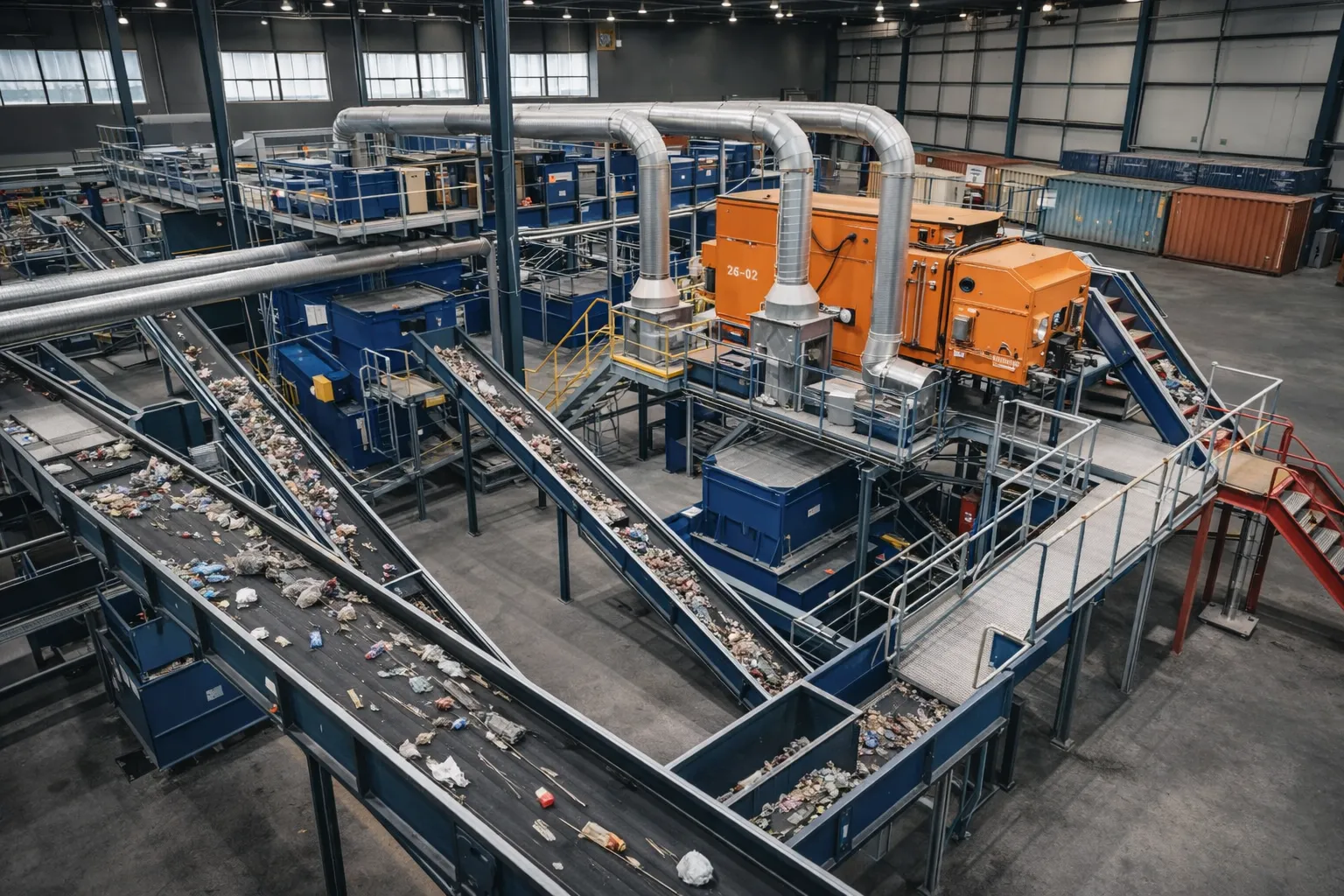
Waste sorting plant with conveyor lines and processing equipment
Solutions Industries Waste management
Sector waste management

Transport optimization for commercial waste management

Optimize territories, pickup frequencies, and master routes with software that accounts for fluctuating collection volumes and the specific demands of waste logistics.

Commercial waste management requires more than day-level route optimization. Collection volumes are often uncertain at planning time, while territories, pickup cycles, and robust route structures still need to fit together in a practical and economical way.

Why this industry works differently

Uncertain volumes instead of fully deterministic route assumptions

Territories, frequencies, and master routes must be designed as one system

Stable structures outperform short-term theoretical optima

Industry context

Commercial waste logistics is primarily a structural planning challenge

In many waste networks, the decisive question is not how to optimize one day of tours, but how to create the right structural foundation above it. When territory design, pickup frequencies, and route frameworks are set up well, operational dispatch becomes more stable and scalable.

Collection volumes are often not known exactly at planning time

Territories, pickup frequencies, and master routes must be designed together

Product groups and container concepts follow different service logics

Seasonal fluctuations and customer-specific usage profiles shift utilization continuously

Robust structures matter more than purely theoretical short-term optima

Restrictions from the network, vehicles, and locations determine feasibility

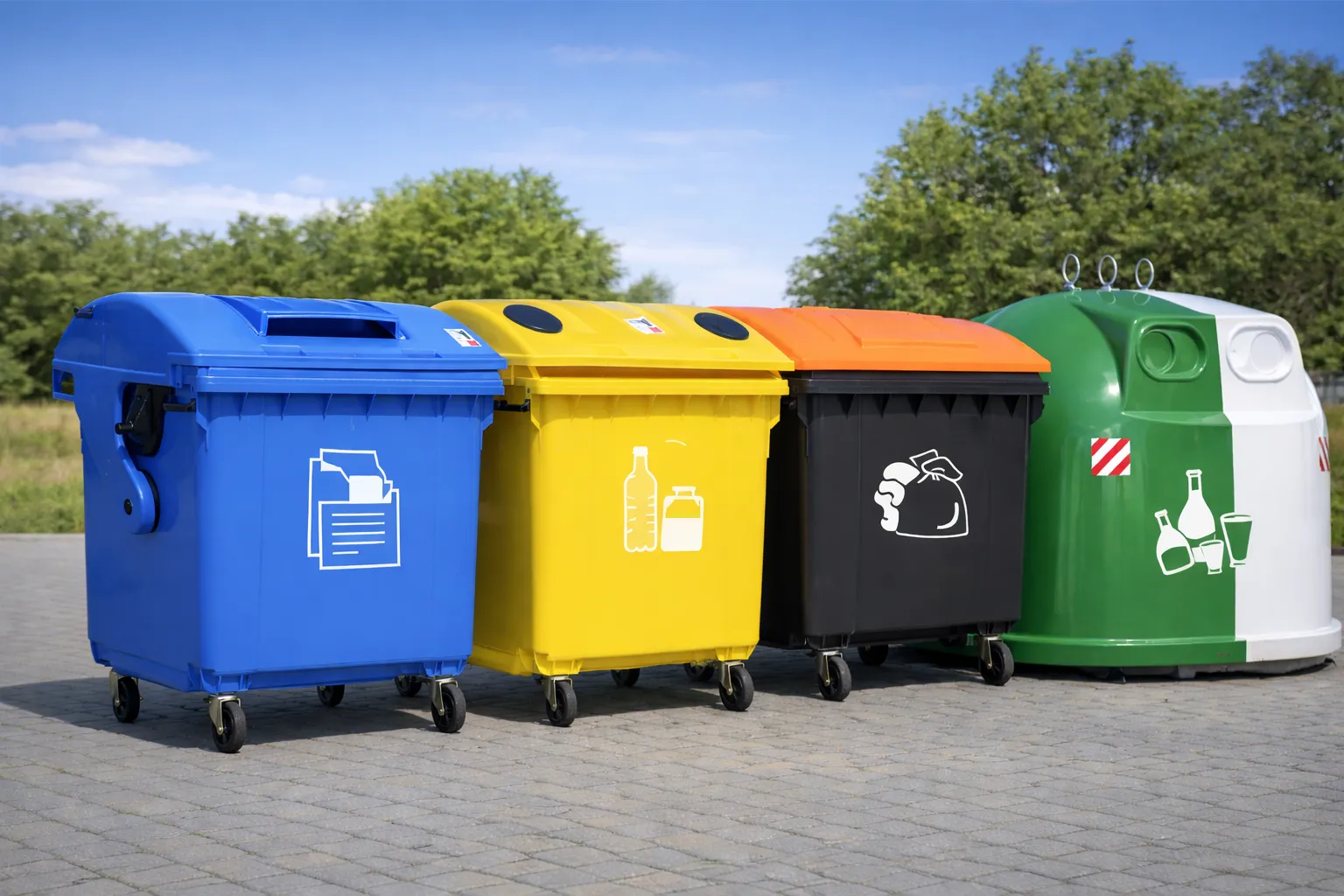
Row of color-coded recycling containers outdoors
Three planning pillars

Three levers for a resilient planning structure

01

Territory optimization

Territories should balance demand potential, driving times, customer structures, disposal routes, and operational restrictions. The goal is not just geographic allocation, but a long-term structure that supports stable service delivery.
02

Pickup frequency planning

In commercial waste management, pickup cycles for individual products and customer groups need to be coordinated across product categories. Strong interval planning reduces unnecessary trips, improves utilization, and creates a better fit between customer demand and operational execution.

03

Master route planning

Because actual pickup volumes are uncertain, routes must remain resilient under fluctuating volumes, shifting pickup needs, and day-to-day deviations. The objective is a route structure that stays stable in practice while preserving enough flexibility for operational dispatch.

Planning requirements

What must be considered in commercial waste logistics

Waste logistics cannot be planned by geography alone. Volume uncertainty, product logic, and operational restrictions all need to be translated into a planning structure that stays reliable in practice.

Uncertain pickup volumes

Planning often cannot rely on fixed order quantities. It must work with expected values, fluctuation ranges, and robust structural assumptions.

Different product groups

Different waste streams and container concepts follow different service patterns. These differences still need to come together in one consistent overall plan.

Overlapping pickup cycles

Services cannot be planned in isolation. The biggest effects appear when frequencies across products and customer groups are coordinated with each other.

Operational realism over theoretical optimum

A mathematically tight plan is not always the best plan. In practice, stability, adaptability, and reliable execution matter more.

Real-world network restrictions

Road conditions, access limits, vehicle types, site characteristics, and operational rules directly shape which route structure is actually viable.

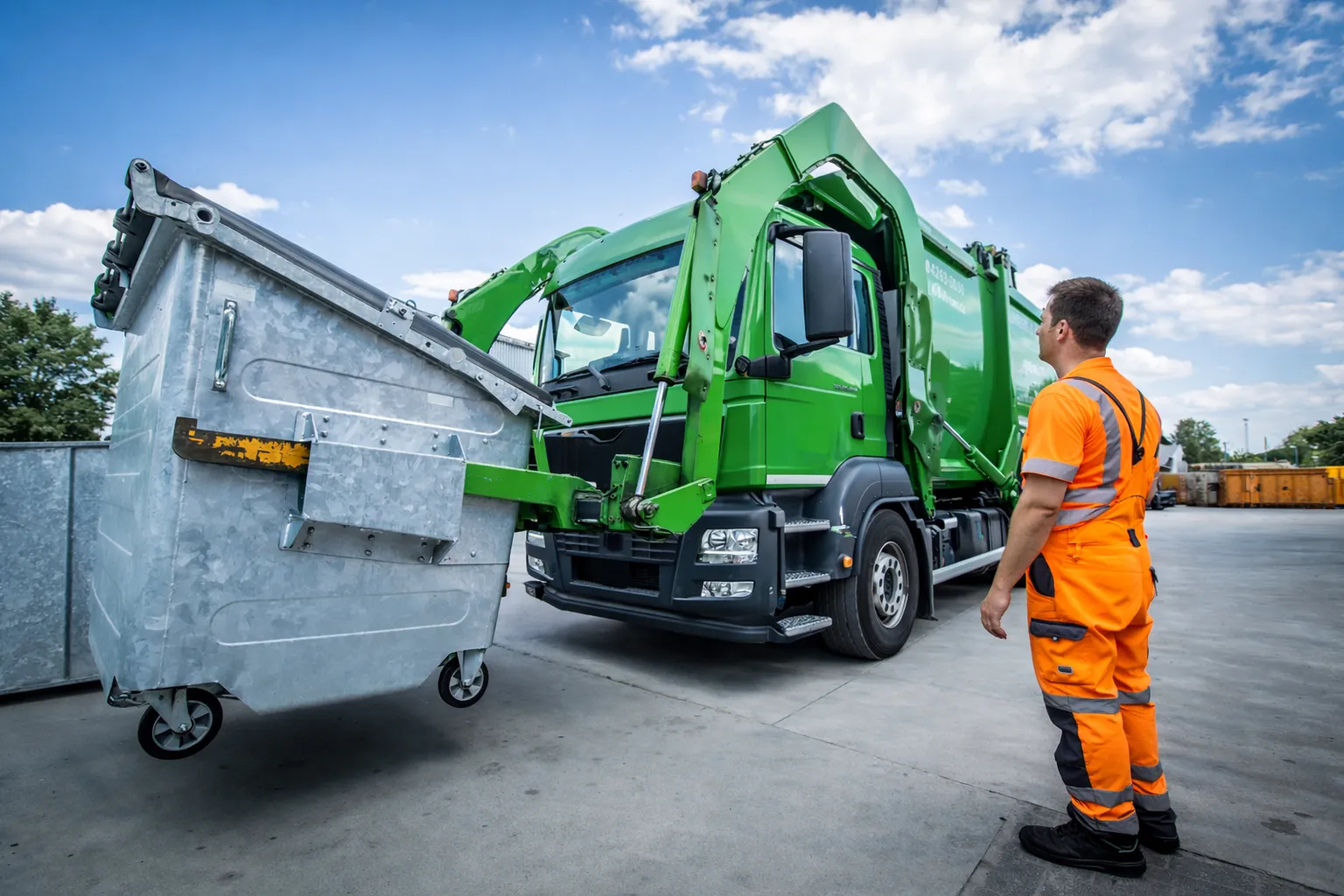
Refuse truck lifting a metal waste container beside a worker
Software support

From structural planning to robust route logic

Design resilient territory structures

We support the structured design of service territories that can carry long-term collection operations instead of just solving isolated daily tours.

Coordinate pickup frequencies

Our optimization helps align product-specific cycles and cross-product relationships so collection structures remain both efficient and practical.

Develop robust master routes

Using uncertain volumes and fluctuating demand as inputs, we generate route structures that are efficient on paper and resilient in day-to-day operations.

Include operational restrictions directly

Operational rules, vehicle constraints, site characteristics, and network restrictions can all be modeled in the optimization logic.

Integrate into existing systems

Modern interfaces let the solution integrate into existing IT, ERP, TMS, or industry systems without unnecessary process disruption.

Your benefits

Better structure, stronger predictability, higher profitability

Better planning structures improve utilization and predictability without losing sight of operational reality. That is what makes waste networks more economical and more stable over time.

Benefit 1

More balanced territory structures

Benefit 2

Better aligned pickup cycles

Benefit 3

More robust routes under volume uncertainty

Benefit 4

Lower over- and under-utilization

Benefit 5

A stronger basis for operational dispatch

Benefit 6

Higher profitability and process stability

Relevant for

Companies that want to develop waste logistics structurally

Commercial waste management companies with growing networks
Organizations with heterogeneous product groups and container concepts
Operations facing fluctuating volumes and uncertain pickup demand
Historically grown territory and route structures
Planning teams that want tighter alignment between tactical and operational logic
Companies optimizing structurally as well as day by day
Worker standing in front of baled recyclable material

Holistic planning structure

Robust territory design, aligned pickup frequencies, and resilient master routes create the basis for better operational decisions.

Optimize waste logistics structurally

Want to improve planning structures in commercial waste management?

We can show you how to shape territories, pickup frequencies, and route frameworks so uncertain collection volumes become part of a robust and economical planning logic.