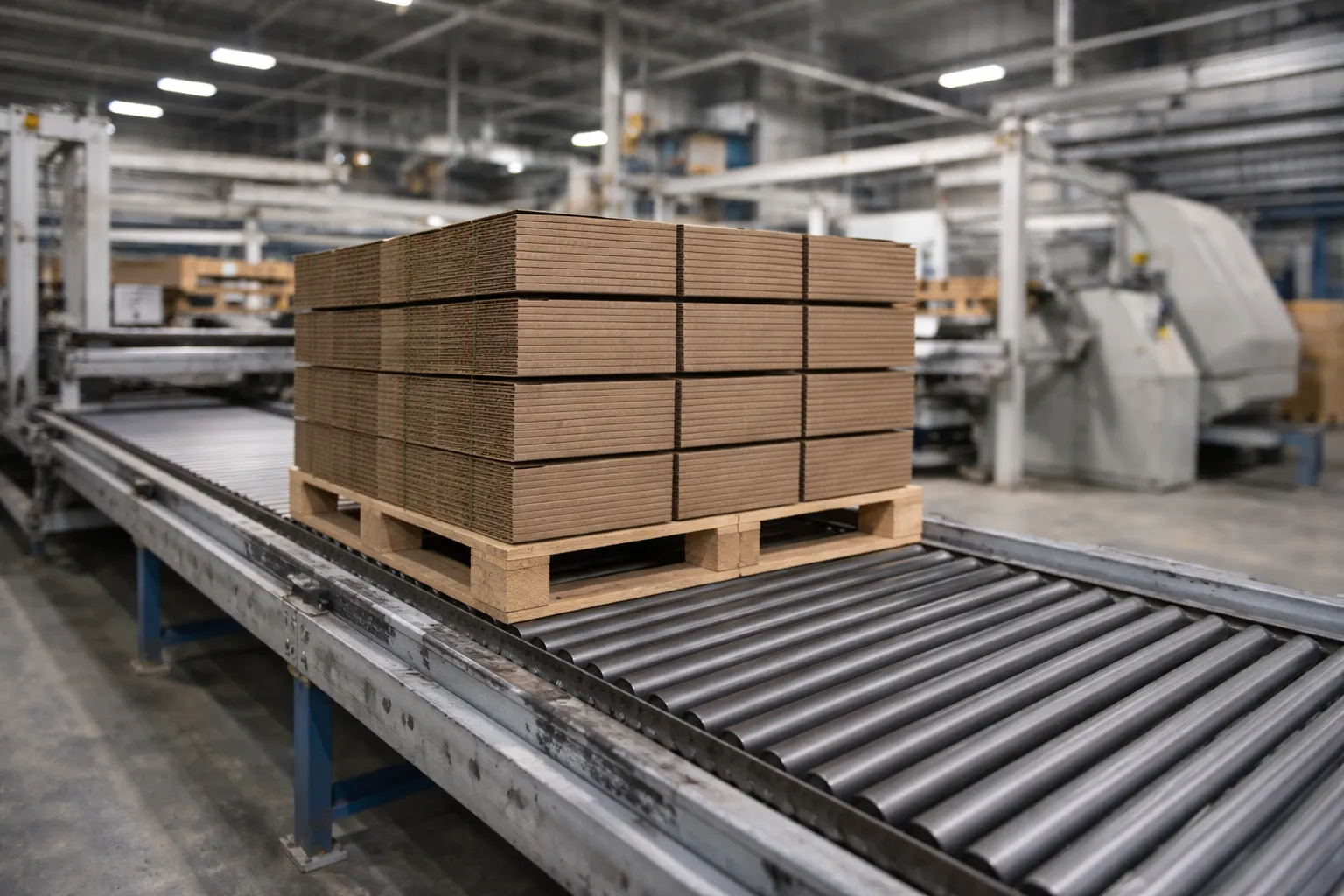
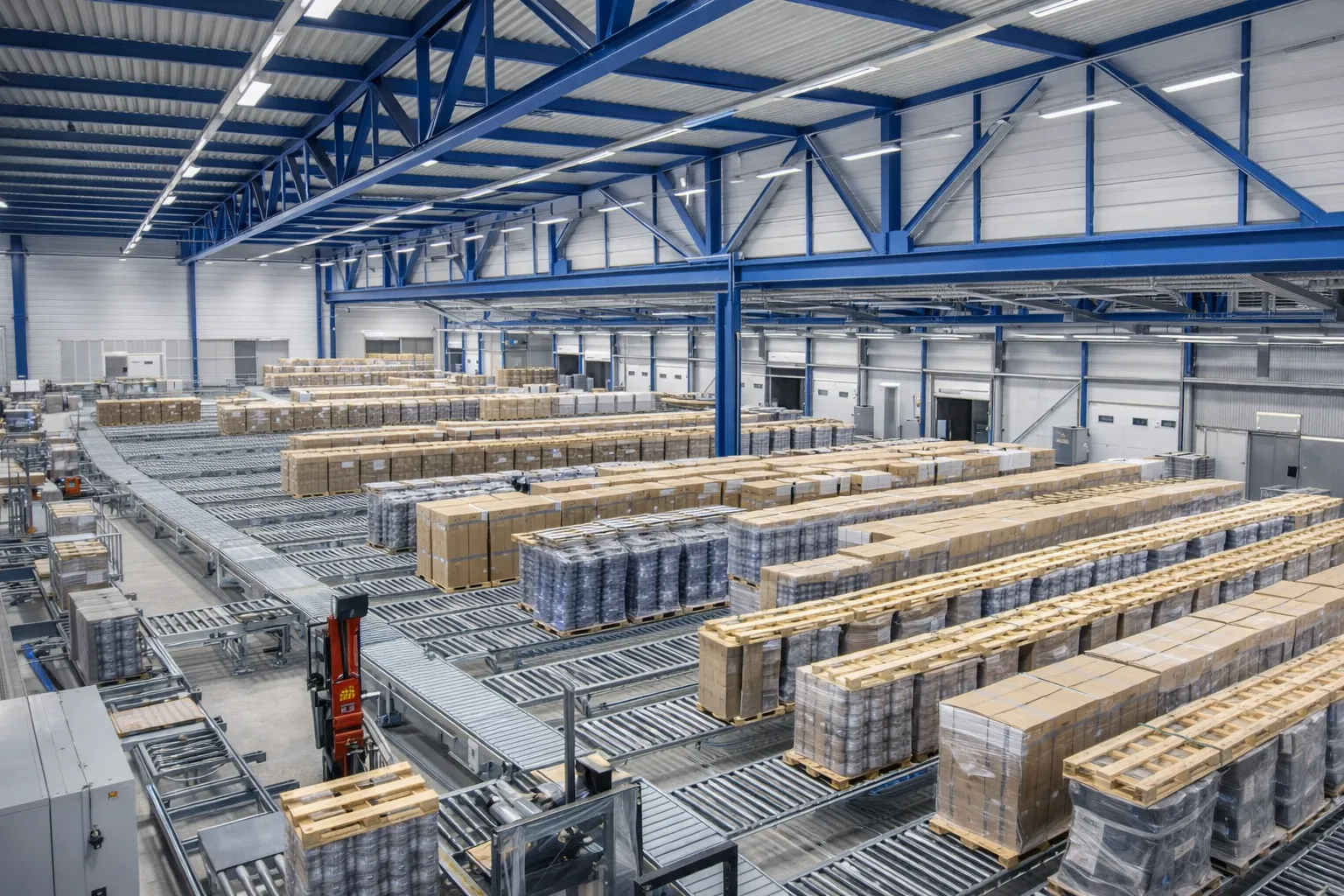
Large paper warehouse with conveyor lines and palletized rolls
Solutions Industries Paper and corrugated board
Sector paper and corrugated board

Transport optimization for paper and corrugated board logistics

Plan paper reels, sheet goods, and corrugated finished goods economically and practically.

Paper reels, sheet goods, and corrugated finished goods place high demands on dispatch, vehicle selection, and cargo securing. Planning has to combine profitability with real operational suitability.

Why this industry works differently

Heavy, sensitive, and sometimes moisture-sensitive products

Weight, volume, and loading-pattern restrictions at the same time

Tight alignment between plant, shipping, dock, and transport

Why this industry needs specialized planning

Paper and corrugated board transports need more than standard dispatch

The logistics of paper and corrugated board combines weight, volume, sensitivity, and tight delivery windows in ways standard transport planning rarely captures well.

High weights, sensitive materials, and strict cargo-securing requirements

Volume-driven shipping structures in corrugated board logistics

Tight interaction between plant, warehouse, shipping, and loading dock

Time-critical delivery with fixed slots and cut-offs

Different transport profiles by product group and route

Strong cost pressure combined with high delivery quality expectations

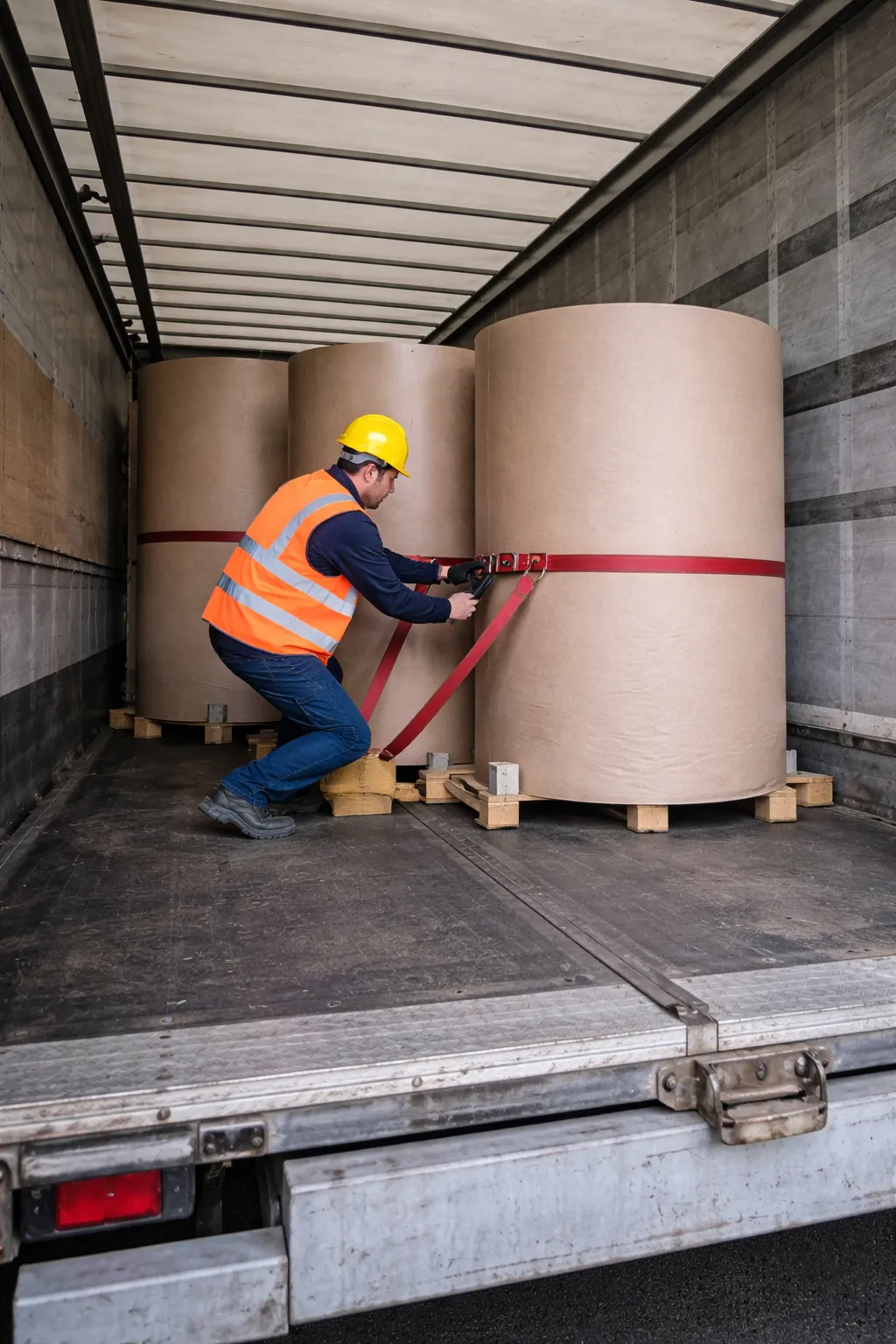
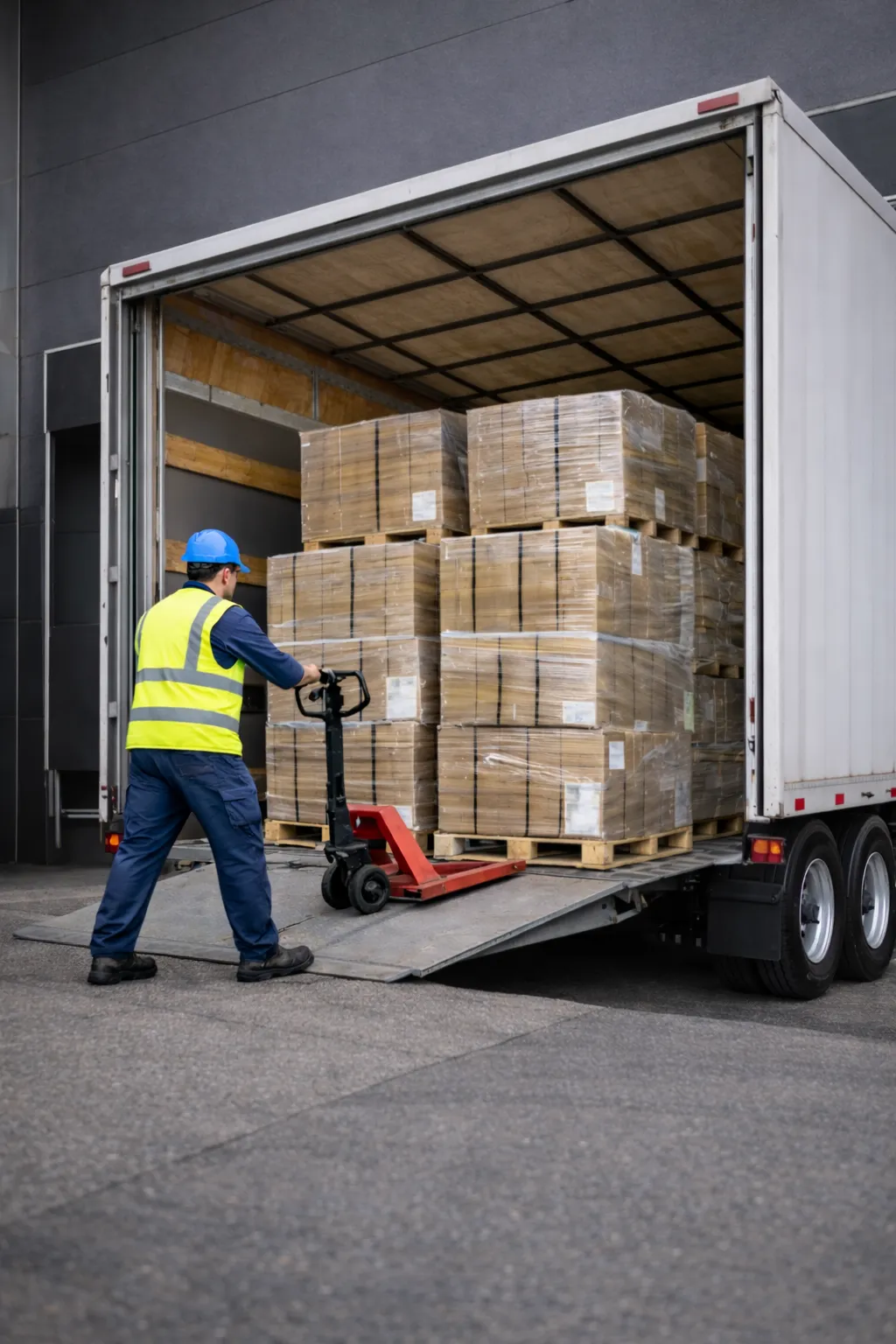
Worker unloading palletized paper products from a trailer
Typical challenges

Where dispatch complexity usually appears

Ensure damage-free transport

Paper reels, sheet goods, and other sensitive products need suitable vehicles, dry and clean loading spaces, and reliable cargo securing. The task is not just to find capacity, but the right type of capacity.

Handle weight and volume at the same time

Depending on the product group, either payload or cube becomes the decisive bottleneck. Robust planning has to evaluate both consistently instead of optimizing for only one dimension.

Cover different transport profiles in one system

Paper logistics is typically more weight-, securing-, and vehicle-driven, while corrugated board is often volume-, stacking-, and time-window-driven. Dispatch teams need one planning system that understands both realities.

Synchronize plant, warehouse, and shipping

In corrugated board operations especially, production sequence, interim storage, shipping priorities, and tour planning are tightly connected. Transportation cannot be optimized in isolation.

For paper

Weight, product protection, and vehicle suitability

Vehicle suitability by shipment or product group

Dry, clean, and appropriate loading surfaces

Consideration of reels, sheet goods, and palletized goods

Weight restrictions and axle-load proximity

Industry-specific cargo securing

For corrugated board

Cube efficiency, shipping rhythm, and responsiveness

High cube utilization at lower weight density

Moisture and weather sensitivity

Palletization, stackability, and loading-pattern rules

Synchronization between plant, warehouse, and customer

Shipping by priority, sequence, or cut-off

How the software helps

Optimization software that respects real operational constraints

Our software calculates planning recommendations for tours, vehicles, and loading units while accounting for industry-specific restrictions, operational dependencies, and execution risk.

Tour planning with restrictions

Automatic tour optimization that considers time windows, capacities, route logic, priorities, plant rules, and dock constraints.

Vehicle and shipment assignment

Suitable vehicles can be matched to products, weights, loading patterns, handling needs, and risk profiles in a structured way.

3D load planning and loading-pattern logic

Where required, dimensions, stacking rules, sequencing, and loading-space usage can be included directly in the planning recommendations.

Interactive dispatch support

Planners can adopt proposals directly or adjust them selectively so operational expertise and algorithmic optimization reinforce each other.

Your benefits

Profitability, quality, and risk control together

Benefit 1

Better profitability

Benefit 2

Higher delivery quality

Benefit 3

Lower transport risk

Benefit 4

Less dispatch complexity

Benefit 5

More scalability for growing networks

Typical scenarios

From paper to corrugated board

Paper reels and sheet goods
Corrugated board finished goods
Mixed networks across plants, warehouses, and carriers
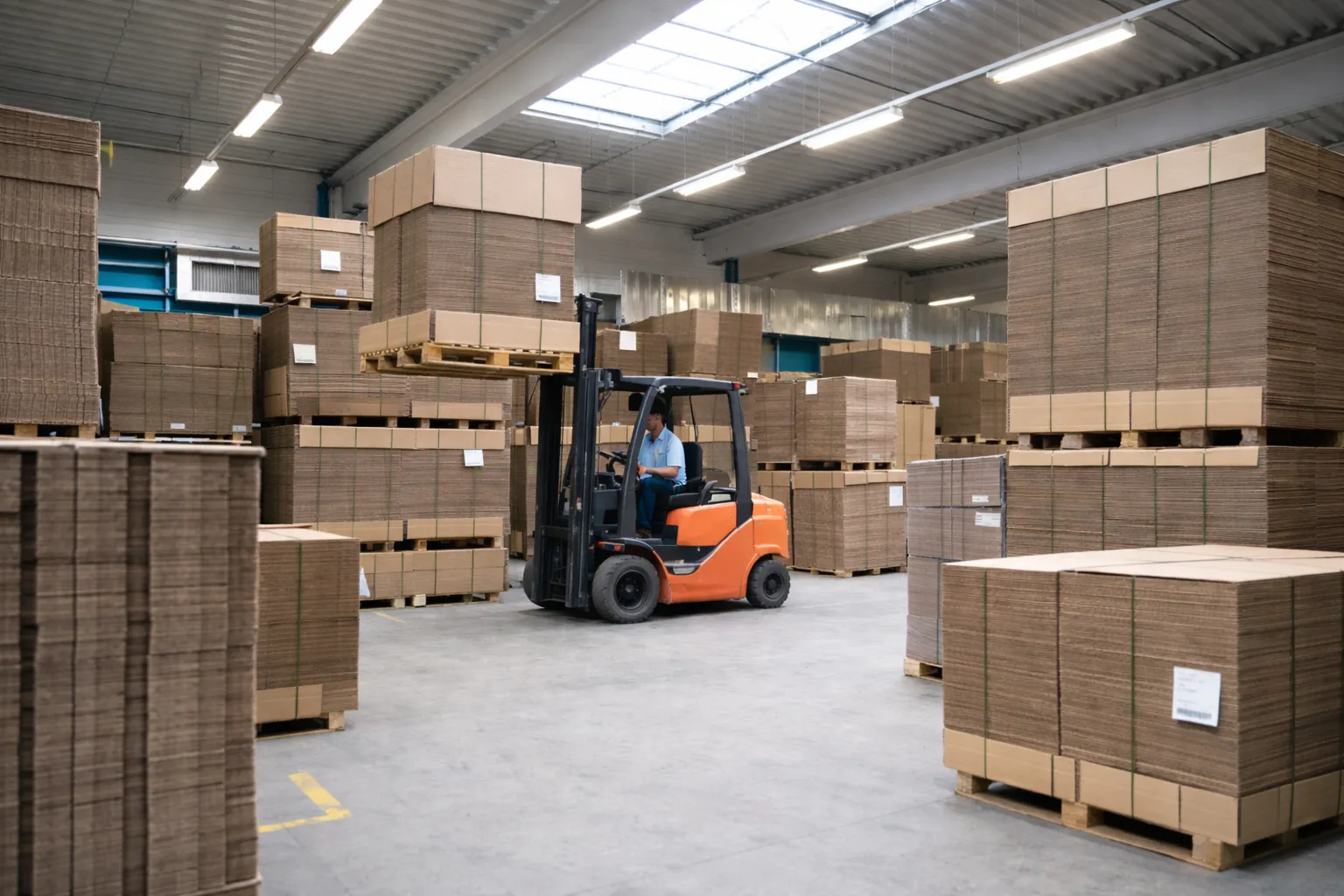
Forklift moving stacked corrugated-board pallets in a warehouse