
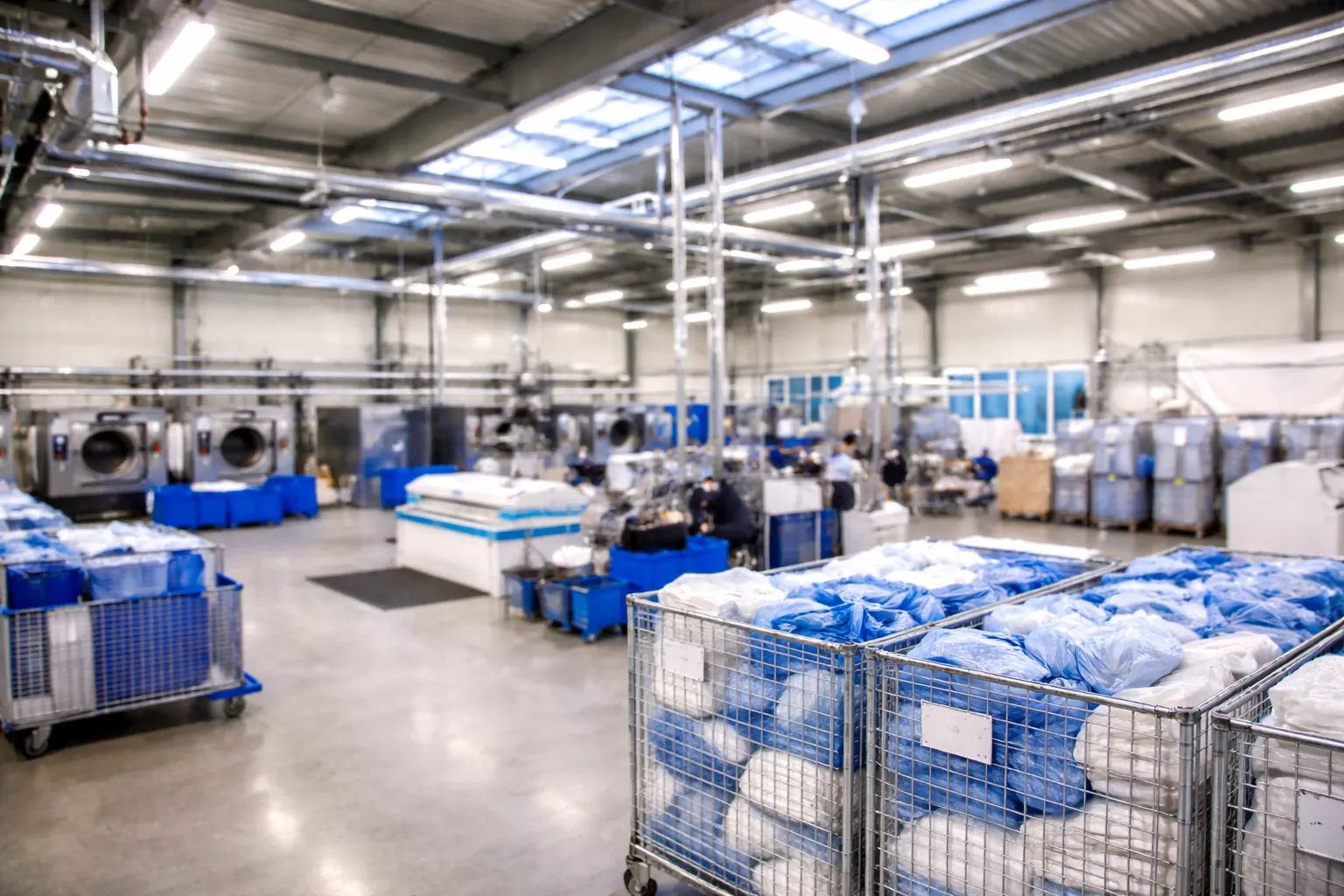
Laundry facility with textile carts and industrial machines
Solutions Industries Textile services
Sector textile services

Transport and supply optimization for industrial laundries

Plan textile cycles efficiently. Secure supply. Reduce transport costs.

Industrial laundries do not operate classical one-way delivery tours. They run closed textile cycles: clean goods out, soiled textiles back, containers in circulation, inventories under control, and strict service commitments every day.

Why this industry works differently

Closed textile cycles instead of one-way distribution

Integrated delivery, return, and circulation control

Supply reliability under strict service commitments

The challenge in industrial laundries

Supply, returns, and circulation flows have to fit together

Classical tour planning is not enough for industrial laundries. Vehicles deliver clean goods, collect soiled textiles, maintain stock security at the customer, and keep load carriers circulating at the same time.

As customer counts grow and segments such as healthcare, hospitality, care, or workwear add different requirements, the planning complexity increases quickly. That is where a dedicated optimization system creates leverage.

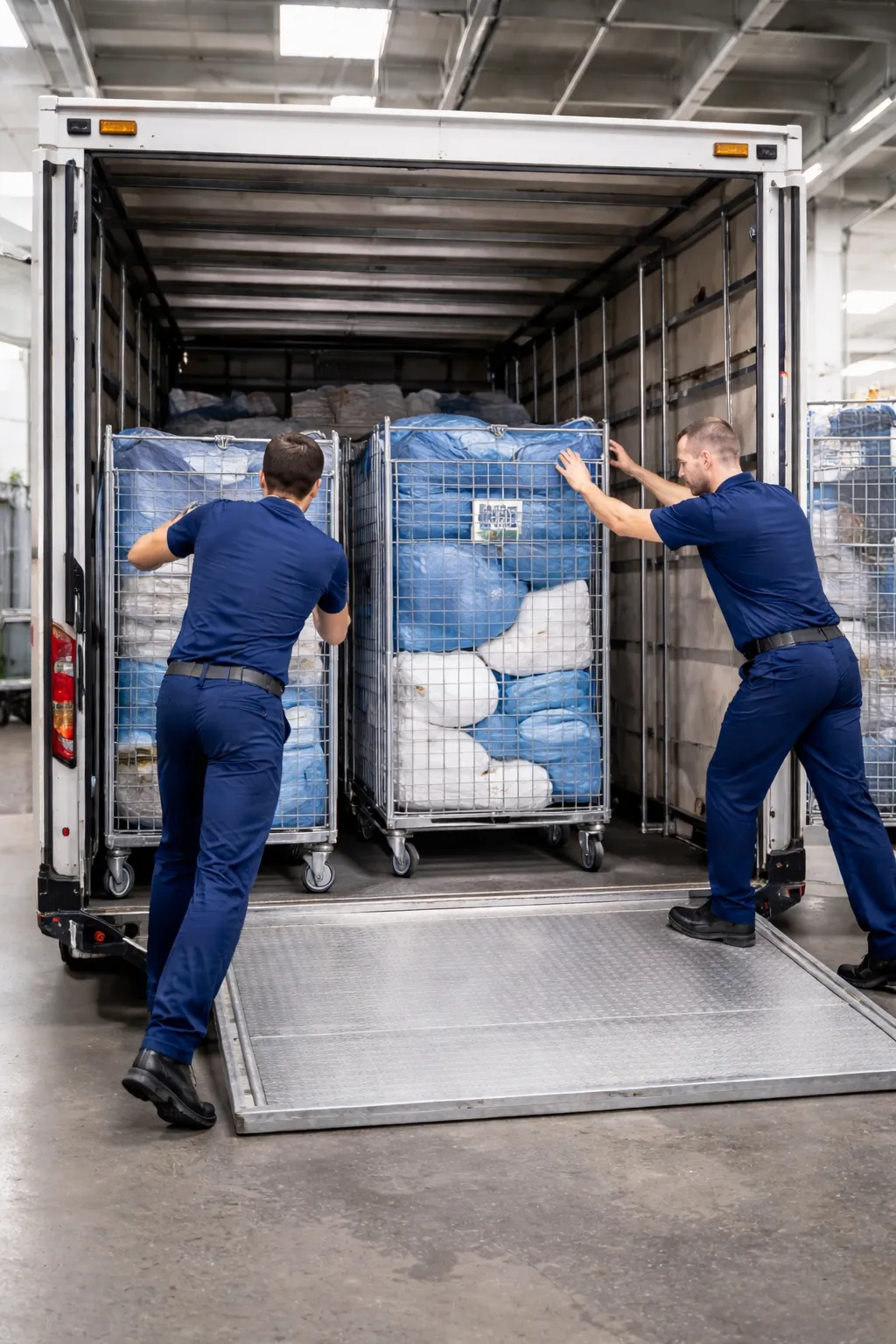
Workers pushing textile carts into a delivery truck

Supply optimization

From tour planning to supply optimization

We do not look at industrial laundries as simple transport networks. We treat them as supply systems for textile cycles. That means recurring tours, integrated delivery and pickup, inventory logic, circulation assets, and short-notice changes all belong in one planning model.

Plan tours intelligently

Recurring tours, fixed delivery rhythms, time windows, territory logic, and vehicle capacities come together in one consistent planning model. Dispatch teams receive proposals that can be adopted directly or refined selectively.

Optimize delivery and pickup together

Delivering clean goods and returning soiled textiles are two sides of the same process in industrial laundries. Our algorithms plan both together instead of creating isolated decisions.

Keep supply stable

The trip is only one part of the task. Supply reliability at the customer also matters, which is why stock logic, inventory, and demand structures can be included in the planning process.

Steer circulation assets transparently

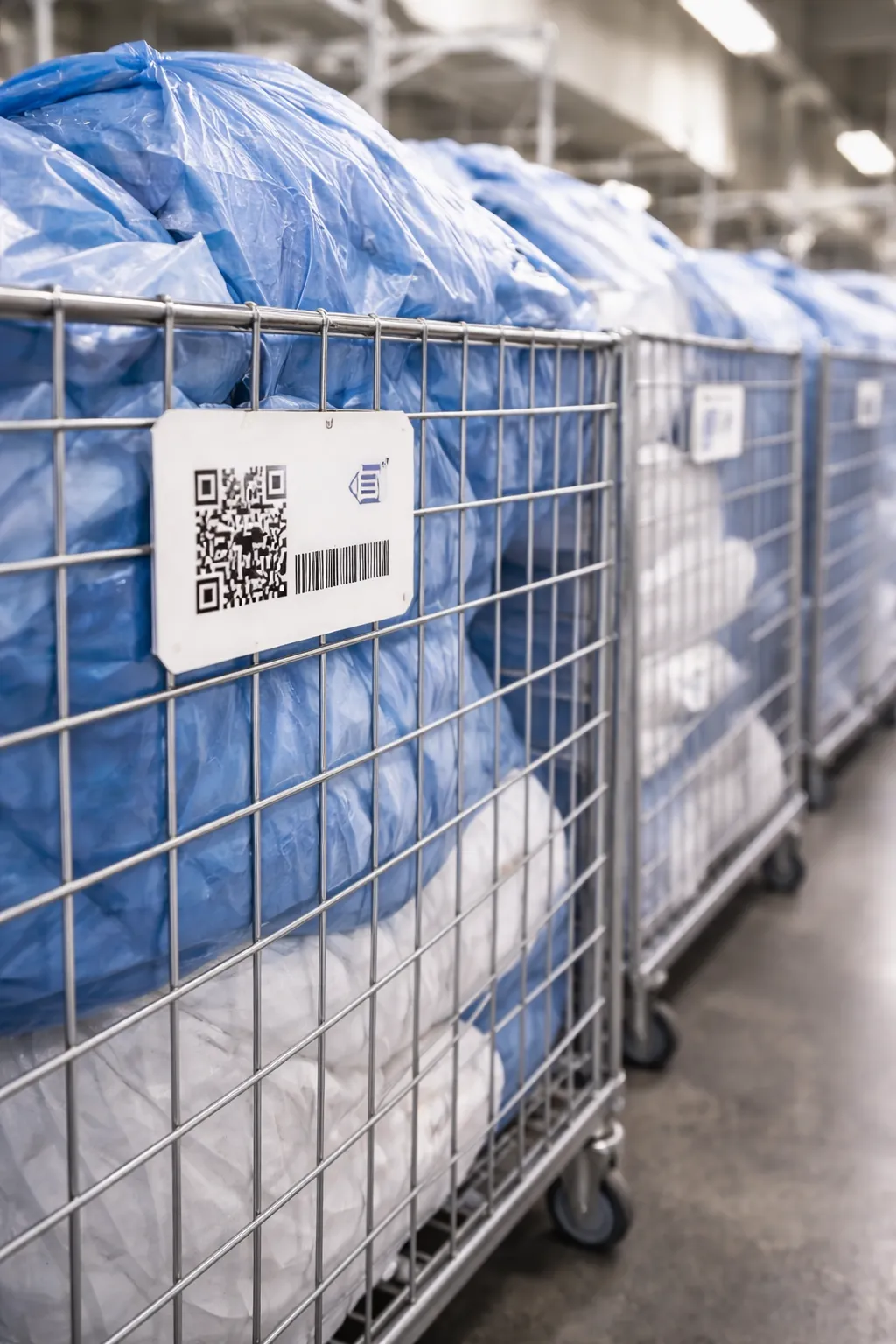
Containers, textile bags, rolling carts, and other load carriers are critical bottlenecks in many operations. Our software creates transparency across those circulation flows and supports better control.

React quickly to change

Additional demand, special trips, and short-notice changes can be integrated into ongoing planning without rebuilding the entire tour structure manually.

Operational restrictions

Typical requirements we can model

Delivery and pickup within the same tour

Recurring tours and fixed service days

Fluctuating volumes and different demand patterns

Vehicle capacities and utilization

Time windows, site rules, and access restrictions

Multiple operating sites or depot structures

Prioritized customers and defined service levels

Container and load-carrier circulation

Special demand and short-notice add-on jobs

The connection between tour planning and load planning

Worker sorting folded textiles on storage shelves
Relevant across different segments

One supply system for different textile service profiles

01

Hospitals and care facilities

This segment depends on supply reliability, predictable workflows, and precise operational control. Our software helps structure that complexity efficiently.

02

Hospitality and gastronomy

Fluctuating occupancy, seasonal demand, and broad assortments make planning demanding. Data-driven optimization helps build more resilient transport and supply structures.

03

Workwear and textile services

Wearer-related processes, return flows, exchange cycles, and high coordination needs require a planning logic that goes well beyond stop sequencing.

Your benefits

More stability in dispatch, utilization, and supply

Benefit 1

Lower mileage and better vehicle utilization

Benefit 2

Less daily dispatch effort

Benefit 3

More stable supply with higher predictability

Benefit 4

Faster reactions to deviations and additional demand

Benefit 5

More transparency across textile cycles and operational bottlenecks

Close-up of tagged textile carts filled with laundry bags

Practical instead of generic

Our planning proposals follow real processes, restrictions, and bottlenecks in textile service operations, not an abstract standard route model.

More than standard tour planning

A system that supports dispatch in daily operations

Standard solutions reach their limits quickly in industrial laundries because they do not model textile cycles deeply enough. Our software is built to translate real operational processes into practical planning recommendations.