
Direct transports
In direct transport, one or a few shipments move with little or no handling between pickup and delivery. This model is especially relevant for sensitive goods, tight delivery windows, or relations with sufficient shipment density.

Less-than-truckload operations place high demands on dispatch, capacity usage, and service quality. Our transport-optimization software helps companies consolidate shipments intelligently, plan pre-haul, linehaul, and post-haul efficiently, and integrate complex restrictions reliably into dispatch.
Steer LTL economically. Model restrictions cleanly. Automate planning.
Why this transport structure is different
LTL combines consolidation, capacity logic, and service commitments in one model
Direct and network transport have to be evaluated against each other shipment by shipment
Operational restrictions determine profitability, not just the shortest route
Less-than-truckload sits between classic groupage and full truckload. Typical shipments are too large, too specific, or too restrictive for a groupage network, but still do not fill an entire vehicle. That is exactly where operational complexity appears.
In practice, the question is not only which vehicle is free or which route looks shortest. What matters is whether shipments can be combined sensibly, whether loading and unloading logic works, whether time windows and cut-offs are met, and whether the resulting transport structure remains economical. LTL is therefore not just a routing topic. It combines dispatch, network logic, capacity evaluation, and load planning in one continuous optimization approach.
LTL sits operationally between classic groupage and full truckload
Consolidation only creates value when restrictions, transit times, and service promises are respected
Pre-haul, linehaul, and post-haul often need to be planned as one connected transport structure
Capacity is not defined by weight alone, but also by load meters, pallet slots, and dimensions
Time windows, cut-offs, and linehaul services directly affect dispatch decisions
Routing, dispatch, and load planning need to work together operationally
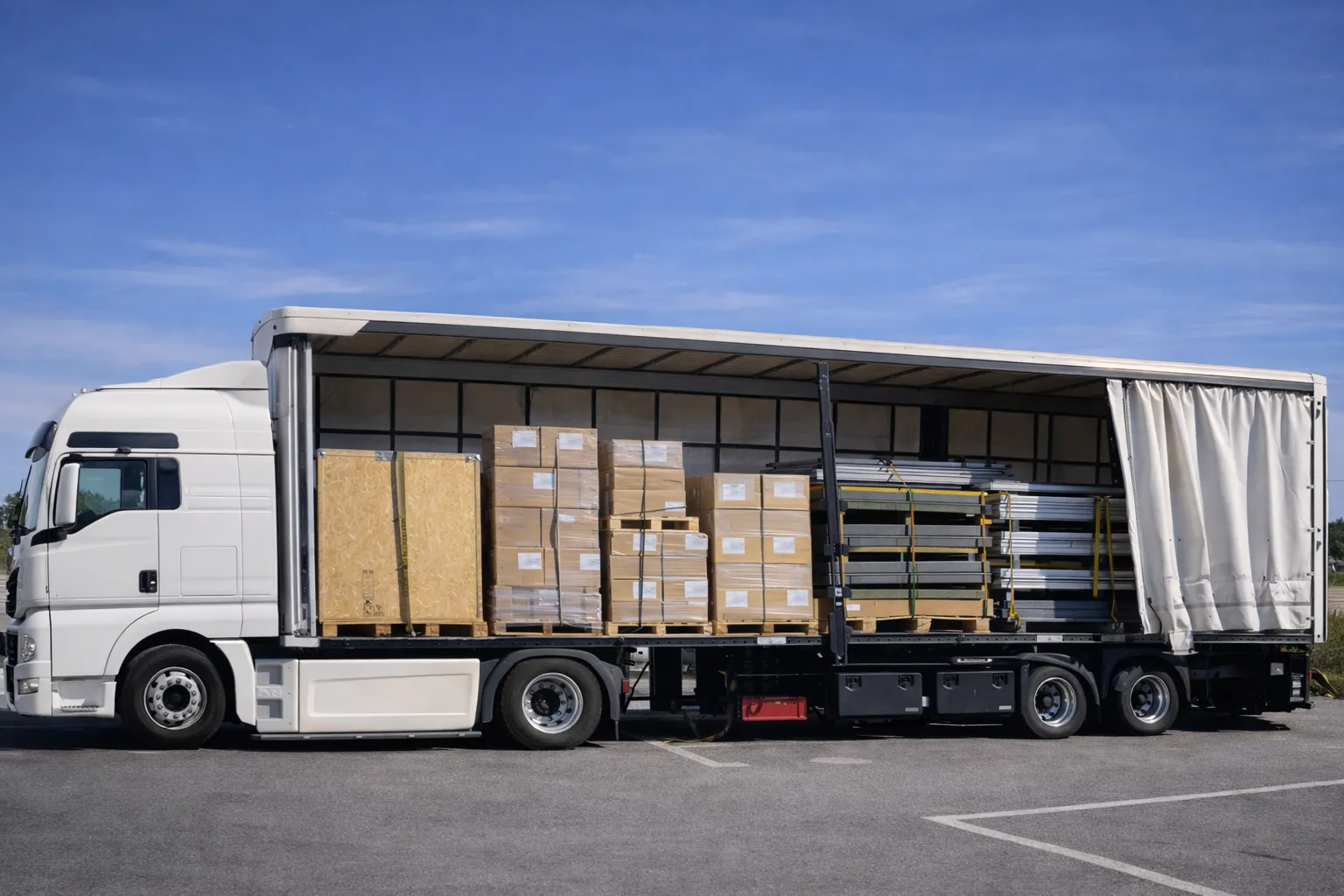
LTL operations are usually organized in one of three models. Our software helps identify the right transport model for each shipment and align downstream dispatch accordingly.
In direct transport, one or a few shipments move with little or no handling between pickup and delivery. This model is especially relevant for sensitive goods, tight delivery windows, or relations with sufficient shipment density.
In a network model, shipments are collected in pre-haul, consolidated through hubs or cross-dock facilities, moved in linehaul, and delivered in post-haul. This model improves utilization and is especially economical where recurring relations and stable volumes exist.
Many companies combine both approaches. Depending on shipment structure, service level, relation, and utilization, dispatch needs to decide whether an order should move directly or through the network. That decision has major impact on cost, transit time, and resource use.
The most important requirements are the ones that connect capacity, time, loading logic, and restrictions. That is exactly where robust dispatch separates itself from purely theoretical route optimization.
Several orders have to be combined so capacity is used well without putting transit time, restrictions, or service commitments at risk. Not every free space is automatically economical to use.
In LTL, it is not enough to look only at weight or cube. Relevant capacity dimensions include load meters, pallet slots, dimensions, stackability, overhang, and special sizes. Only the combination of these criteria reflects actual utilization realistically.
Pickup, linehaul, delivery, and possible handling processes often need to be considered together. Planning quality depends on whether those stages are optimized as one integrated chain instead of in isolation.
Pickup times, delivery windows, hub cut-offs, fixed linehaul schedules, and customer-specific service requirements directly affect which dispatch option is feasible and economical.
A route is only well planned if it works in operations. Unloading sequence, cargo accessibility, side or rear loading, liftgate requirements, or special equipment all need to be considered inside planning.
Driving and rest-time rules, cargo securing, dangerous-goods requirements, and individual customer or site rules add further complexity. A strong solution needs to model these factors systematically.

Many systems treat LTL either like simplified full truckload or like a groupage variant. Both views are too shallow.
In practice, that leads to solutions that look strong in the model but generate heavy manual rework in live operations. In LTL, success depends not only on computational power, but on the ability to translate real transport structures precisely into optimization models.
Many systems treat LTL either like simplified full truckload or like a groupage variant. Both views are too shallow because they miss the specific combination of consolidation, capacity logic, and restrictions.
In practice, planning often fails because routing, dispatch, and load planning are treated as separate disciplines. The result may look strong on paper, but causes heavy manual rework in live operations.
Typical results are incomplete capacity checks, poor vehicle assignments, inefficient consolidations, avoidable empty mileage or detours, and increasing dispatch effort.
Operational restrictions are often known only implicitly and are not embedded consistently in planning logic. In LTL, success therefore depends not only on computational power, but on translating real transport structures precisely into optimization models.
How our software makes LTL manageable
Our transport-optimization software helps companies plan LTL operations in a structured, scalable, and economical way. Operational complexity is not ignored. It is turned into a usable decision framework.
The result is more transparency in dispatch, less manual planning effort, and a better basis for stronger utilization, better service quality, and more economical transports.

Our software helps combine compatible orders systematically so capacity is used better and economical route combinations become visible.
For each shipment, the system can evaluate whether direct execution or integration into a network model is more economical and more compatible with the required service level.
Pickups, deliveries, and handling processes are modeled in one continuous planning logic instead of being optimized step by step in isolation.
Temporal constraints, fixed linehaul schedules, customer-specific requirements, and vehicle-related restrictions feed directly into dispatch and optimization.
Load meters, weight, pallet slots, and dimensions are considered together with loadability, sequence, and equipment requirements.
The result is not only mathematically efficient, but also practical to execute in everyday LTL dispatch.
LTL becomes economical when consolidation, transport structure, capacity, and restrictions are planned together. That is exactly where the operational value is created.
Shipments are combined intelligently without losing sight of operational feasibility.
Complex restrictions and planning rules are modeled systematically and processed automatically.
Time windows, transit times, and customer-specific requirements feed directly into optimization.
Direct transports, network transports, and resource deployment are evaluated on a robust basis.
Delivery commitments can be met more reliably, even in complex LTL structures.
Growing transport volumes and more complex networks can be managed without proportional growth in dispatch effort.
Who this solution is especially relevant for
Our solutions are especially relevant for companies that want to do more than administer LTL. That includes freight forwarders with part-load or LTL business, transport networks with pre-haul, linehaul, and post-haul, high-density dispatch organizations, and shippers with recurring part-load volumes and complex restrictions.

Optimize LTL systematically
LTL becomes economical when consolidation, transport structure, capacity, and restrictions are planned together. Our software provides the foundation for that.
If you want to reduce dispatch effort and manage operational complexity more effectively, let’s talk about your LTL use case.
Learn more about route planning, restriction logic, and integrated optimization across several transport stages.
Assess in a structured way where the biggest levers sit in consolidation, network logic, and dispatch.
We can show you how consolidation, capacity evaluation, direct and network transport, and operational restrictions can be combined in one robust dispatch approach.