
Heterogeneous shipment structures
Different dimensions, weights, load carriers, and item restrictions make loading complex quickly. What fits geometrically is often still a poor operational loading choice.
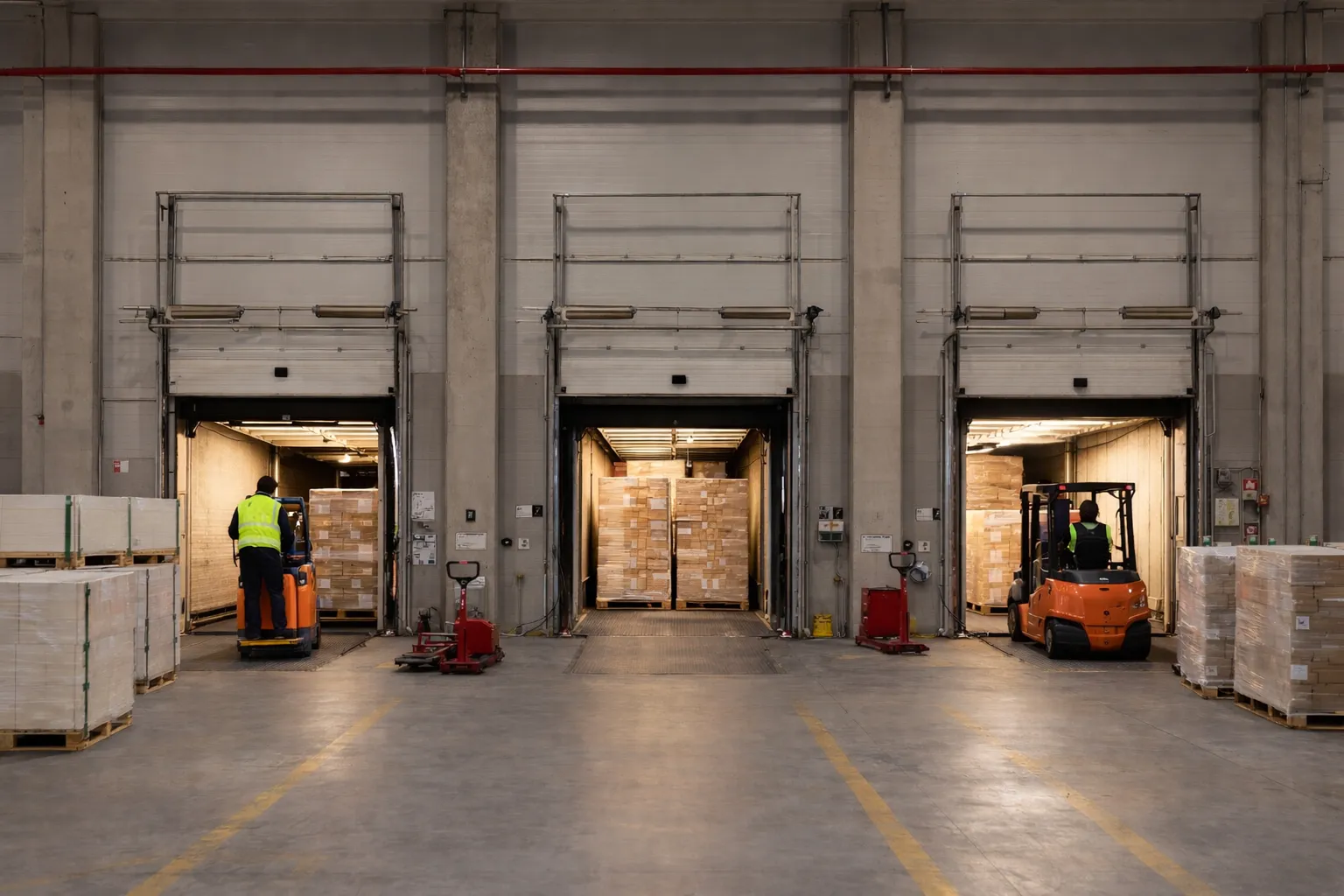
Load optimization in road freight is more than filling free cargo space mathematically.
Shipments, loading units, and packages need to be arranged so capacity is used effectively while all relevant packing rules are respected: dimensions, weight, load distribution, stacking logic, load securing, unloading sequence, and operational feasibility.
Our software combines transport optimization and 3D packing so loading plans become robust decisions for real transport processes instead of fragile manual compromises.
What matters in real operations
Generate legal and robust loading patterns, not just dense ones
Unify geometry, weight, sequence, and load securing in one planning logic
Make loading plans operationally useful for dispatch, warehouse, and ramp teams
In many operations, loading is still planned heavily by hand. Experienced staff decide under time pressure which loading units fit into which vehicle, how goods should be arranged, and in what sequence they need to be loaded.
Load optimization replaces that manual search process with a systematic, software-backed approach. The result is not simply a dense cargo space, but a legal, stable, and operationally sensible loading plan.
Loading is a joint problem of geometry, weight, stability, and process logic
Relevant restrictions range from trailer dimensions to load securing and unloading sequence
Heterogeneous shipments and loading units increase combinatorial complexity quickly
Dense loading patterns are worthless if they are not operationally executable
Multi-stop tours require accessible, route-ready loading patterns
Loading decisions must stay robust and explainable under time pressure
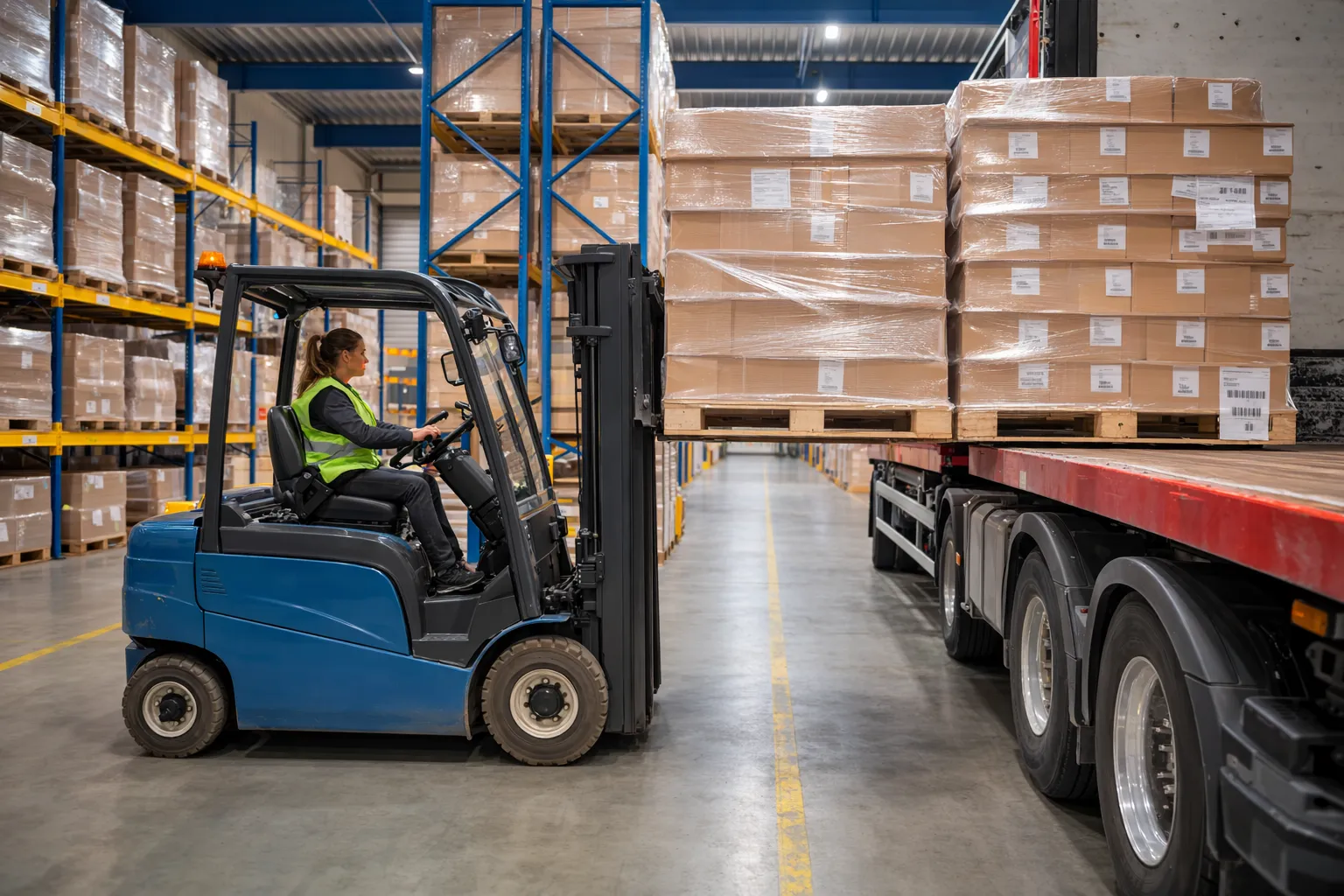
The more heterogeneous shipments, restrictions, and tour logics become, the harder it is to make robust loading decisions under time pressure. That is exactly where software-assisted load optimization creates value.
Different dimensions, weights, load carriers, and item restrictions make loading complex quickly. What fits geometrically is often still a poor operational loading choice.
Gross weight, axle loads, centers of gravity, stacking limits, and overbuild bans are often only considered implicitly. That increases the risk of inefficient or problematic loading decisions.
Loading decisions usually need to be made fast. The more dynamic operations become, the harder it is to identify the best option from many possible combinations.
Voids, badly used residual spaces, and weak packing patterns reduce utilization and create unnecessary capacity demand.
A load can work in the yard and still be impractical on the road. If stop sequence is ignored, restacking effort, delays, and avoidable process costs follow.
Poor load distribution, unstable packing patterns, or hard-to-access loading units complicate execution and raise error risk during loading and transport.
Our solution
Our software combines 3D packing with extensive loading rules. The algorithm does not optimize only for floor space and volume, but for the operational restrictions of road freight execution.
That creates loading recommendations that are not just mathematically strong, but practically usable. Dispatchers, loading managers, and operational teams get faster access to better decisions and more robust processes.
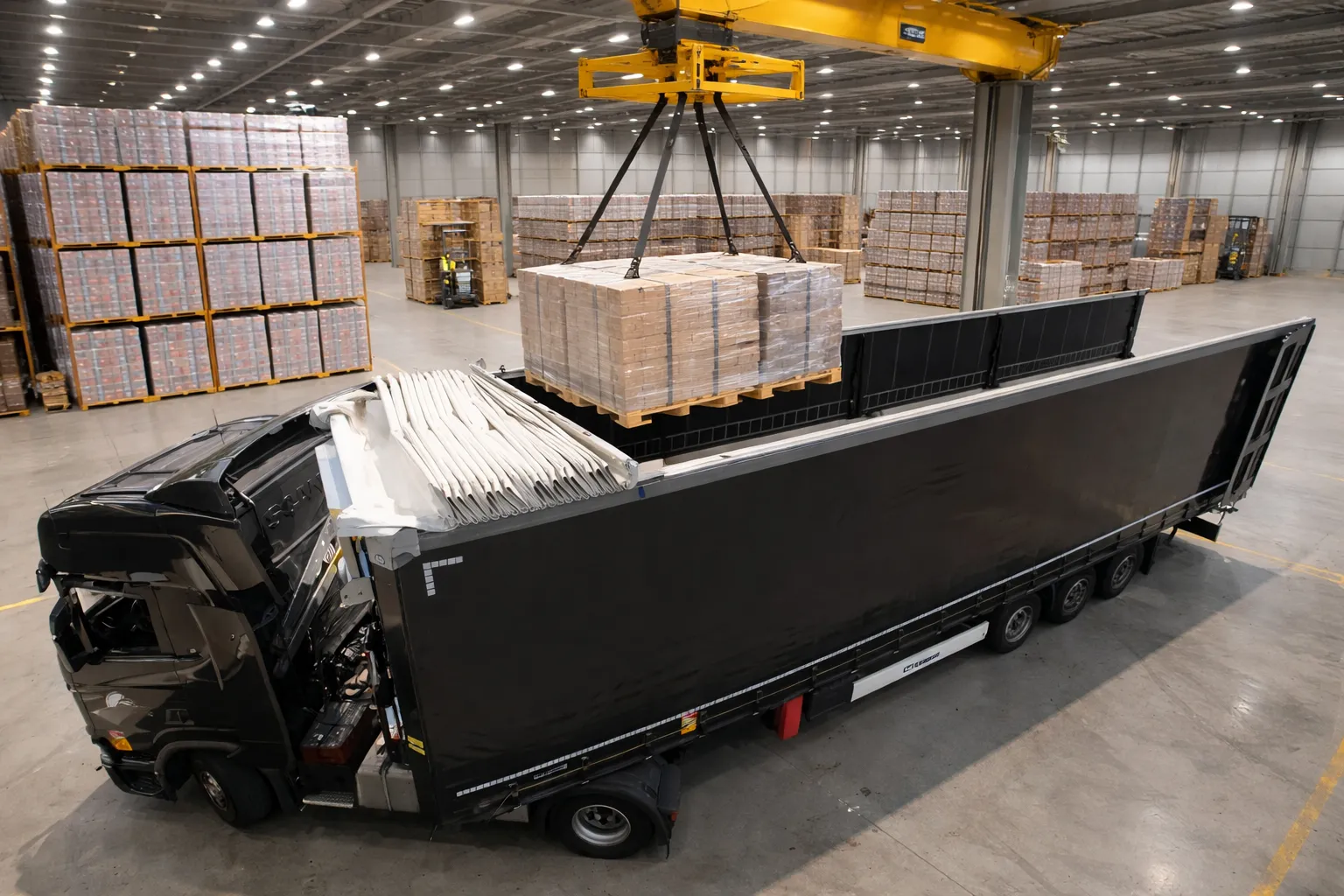
Internal dimensions, usable height, width, and length are considered together with door openings, fixtures, wheel arches, or body-specific constraints. Allowed orientations for individual items or loading units also flow directly into planning.
Strong loading decisions do not only ask whether everything fits, but how weight is distributed in the vehicle. Gross weight, center of gravity, and vehicle-side load distribution are core requirements for legal and road-stable loading plans.
Typical restrictions include stackability, maximum top load, tip sensitivity, minimum support areas, overbuild bans, or rules requiring certain goods to be transported only upright or only flat.
Load optimization also needs to protect load stability. That includes stable block building, avoiding unfavorable cavities, and creating a loading structure that supports safe stowage in daily operations.
Especially with partial unloads and multi-stop tours, stop sequence matters. Loading needs to be built so shipments remain accessible along the route and unnecessary restacking is avoided.
Curtainsiders, box trucks, mega trailers, swap bodies, or double-deck concepts all impose different loading constraints. Optimization needs to model these differences cleanly.
Load optimization creates value not only inside the trailer, but across the full operating process. Strong loading plans improve utilization, feasibility, and responsiveness at the same time.
Load optimization helps use cargo space, deck space, and allowable weight more effectively so more transport output can be delivered with existing vehicles.
Instead of building load plans purely by hand, your teams receive robust recommendations from optimization. That saves time and reduces pressure on dispatch and loading operations.
By accounting for all relevant loading rules, the resulting plans stay understandable and executable for warehouse and ramp teams.
When unloading sequence and access logic are already modeled in planning, extra work on the road and at the ramp drops significantly.
Packing and loading decisions become reproducible, easier to explain, and less dependent on individual expert knowledge. That improves planning quality and operational coordination.
If shipments, vehicles, or priorities change at short notice, loading can be re-optimized quickly so processes remain manageable under dynamic conditions.
Load optimization pays off wherever loading decisions are regularly complex and still need to be made fast.
Step 1
Shipments, loading units, weights, dimensions, vehicle data, and restrictions are taken from existing systems or provided directly.
Step 2
Item rules, stacking constraints, unloading logic, and vehicle-specific restrictions are translated into a robust optimization model.
Step 3
The software computes loading variants under the selected target criteria and operational constraints.
Step 4
Users receive a traceable loading recommendation with 3D visualization and a structured view of the relevant planning decisions.
Step 5
The load plan can be provided to warehouse, loading, or downstream systems and used directly inside operations.
Load optimization creates the most value when it is not treated as an isolated problem. In practice, loading quality and transport efficiency are tightly connected to upstream decisions such as shipment formation, vehicle assignment, and tour planning.
Because our focus is transport optimization and 3D packing, we treat load planning as part of one connected decision model. The better packing, loading, routing, and vehicle deployment fit together, the greater the operational and economic impact.
Loading quality depends strongly on the structure of shipments and loading units. The stronger the input structure, the more robust the loading plan becomes.
Loading becomes more economical when vehicle type, body, and restrictions are matched to each shipment early.
Packing, loading, and route planning should follow the same operational logic so loading patterns still work along the real stop sequence.
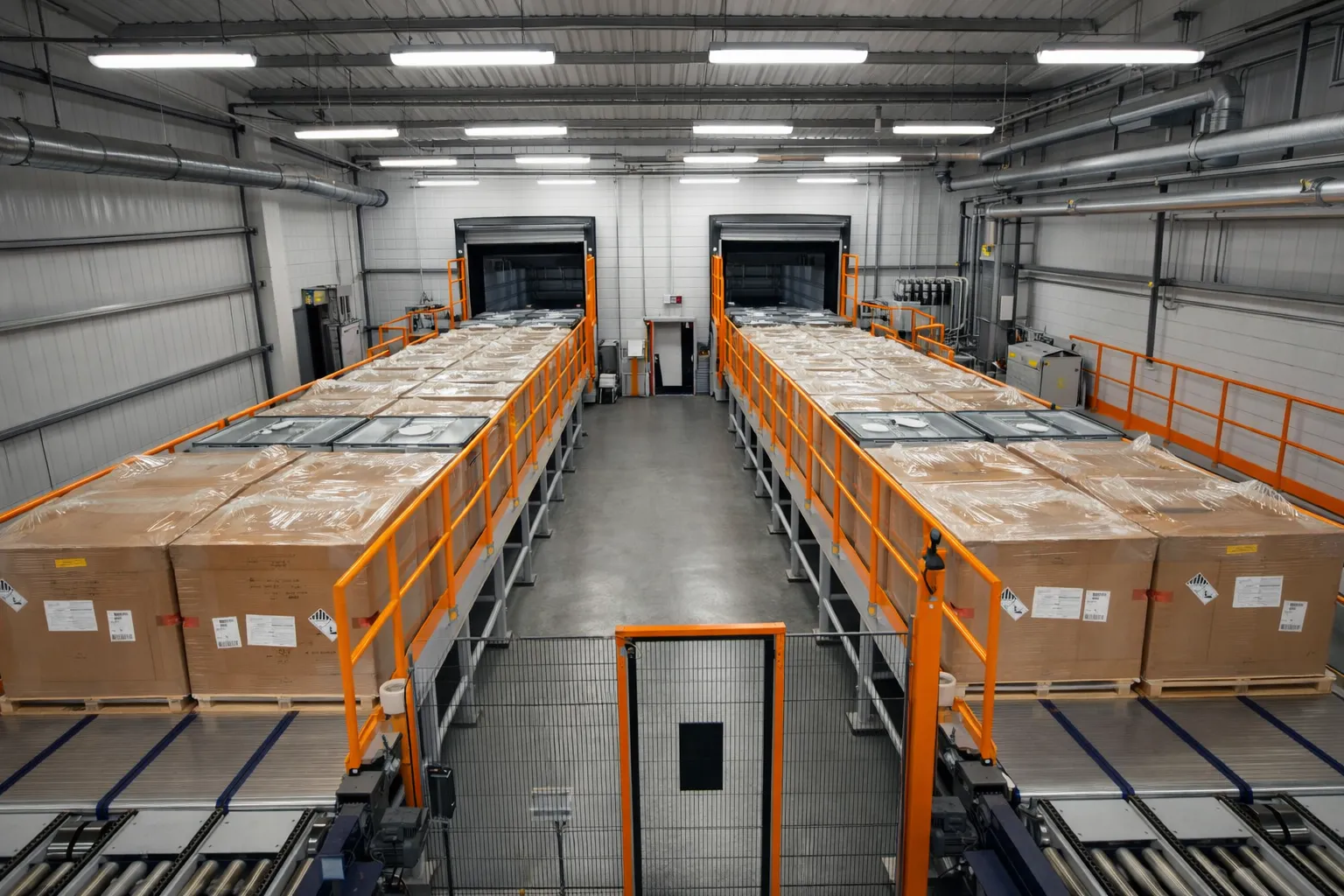
Integrates into existing processes
Master data, restrictions, and planning data can be taken from existing IT systems, while optimization results and load plans can be handed back into warehouse and transport execution processes.
Our solution integrates into existing system landscapes and operational processes. That creates a practical planning component instead of a disconnected stand-alone tool.
If you want to improve load planning systematically, we can show how 3D packing and transport-specific rules can be turned into a robust, repeatable loading process.
Learn more about 3D packing, load planning, and transport optimization for robust transport processes.
Assess in a structured way where the biggest levers sit in loading logic, stowage restrictions, and warehouse execution.
If you want loading plans that bring weight, geometry, sequence, and operational restrictions together reliably, we can show how to turn them into stable processes for dispatch, warehouse, and transport execution.