
Homogeneous pallets
Single-SKU pallets with one product or item type. Ideal for standardized flows, high volumes, and recurring loading patterns.
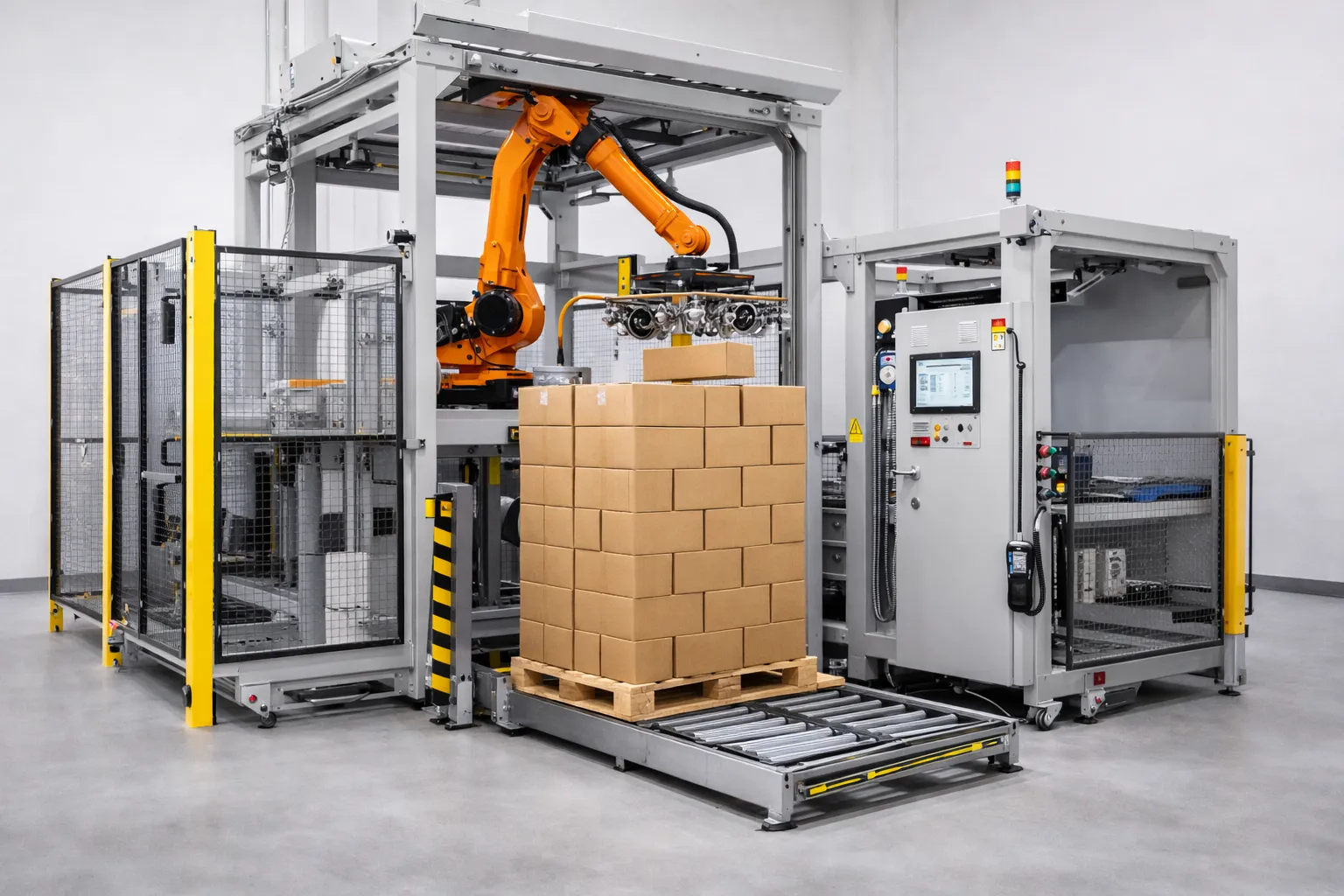
Software-assisted load-carrier building for homogeneous, layer-based, and mixed pallets under a wide range of operational constraints.
Our software optimizes the creation of load carriers under real logistics constraints. Whether homogeneous pallets, pure layer sequences, or complex mixed pallets, we compute robust, economical, and operationally feasible pallet compositions for warehouse, shipping, retail, and transport.
What matters is not only fitting as many products as possible onto a pallet. Load units need to work in daily operations: stable in transport, suitable for picking, aligned with unloading logic, and tailored to product-specific requirements.
What needs to be co-optimized today
Stability, load distribution, and product protection instead of pure space utilization
Sequencing, unloading logic, and store processes directly inside pallet building
Connection to loading, transport, and operational system landscapes
In practice, products need to be arranged on load carriers so they can reliably withstand transport, handling, and the target process. That includes geometric constraints as well as rules for stability, weight, stackability, sequence, and product protection.
Our software helps you model those requirements systematically and turn them into optimized pallet recommendations automatically. The result is load units that do not just fit mathematically, but also work in operations.
Geometric constraints, height limits, and overhangs must be respected reliably
Weight, center of gravity, and load-bearing capacity determine transport stability
Mixing rules, product protection, and stacking logic must not slow operations down
Unloading sequence, shelf logic, and store processes already matter during pallet building
Labeling, scannability, and warehouse handling affect practical usability
Pallet building needs to stay connected to loading, tour logic, and downstream transport
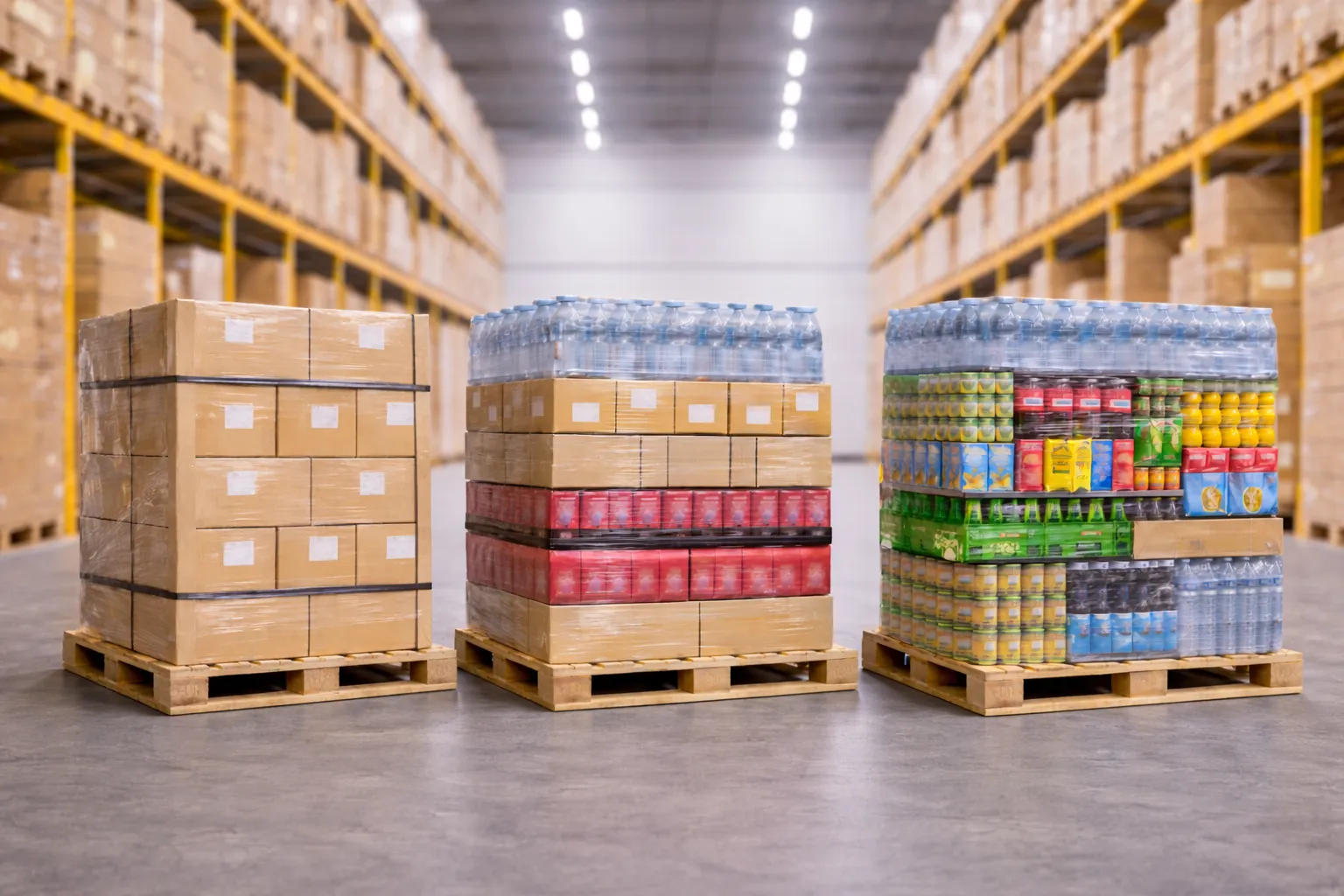
Depending on the product flow, target process, and commercial model, different load-unit structures are required. Our software supports the right pallet logic for standardized, mixed, and process-driven scenarios.
Single-SKU pallets with one product or item type. Ideal for standardized flows, high volumes, and recurring loading patterns.
Pallets with pure layers or defined layer sequences. Especially suitable when a full homogeneous pallet is not reached, but a clear and stable layer logic is still required.
Mixed pallets with multiple products or SKUs. Relevant for retail, store delivery, e-commerce, spare parts logistics, and multi-order processes.
Mixed pallets with a defined unloading or shelf-stocking logic, for example by route, stop order, product group, or aisle.
Pallets that are optimized not only for transport, but also for sales-adjacent or presentation-oriented use cases.
Optimization logic
We combine rule-based optimization with experience from 3D packing, transport planning, and store replenishment. This creates recommendations that are mathematically sound and operationally robust.

Dimensions, pallet types, maximum height, allowed overhangs, and valid product orientations are modeled so footprint and height are used efficiently without violating constraints.
Our software optimizes weight distribution and center of gravity so the result is not only dense, but also balanced and transport-safe.
Support areas, layer formation, load limits, and stable patterns are considered systematically so pallets remain safe under real conditions.
Sensitive, pressure-critical, or non-stackable products receive dedicated rules so problematic product combinations are avoided.
Optimization can be aligned with unloading sequence, picking logic, route order, or store structures when process-ready pallets matter more than pure density.
Mixing bans, product-group logic, temperature zones, dangerous-goods rules, or customer-specific requirements are modeled in a structured way and integrated directly into optimization.
Requirements for labeling, visibility, scannability, and practical handling in warehouse and shipping processes also feed into the recommendations.
Good pallet building does not only improve the individual load carrier. It also relieves warehouse and shipping teams, protects products, increases process reliability, and makes downstream decisions more robust.
Use pallet footprint, loading height, and permissible weight more effectively and reduce unused space.
Create pallets that are not only mathematically reasonable, but also robust in transport and handling.
Protect sensitive and poorly stackable items through rule-based placement and intelligent load distribution.
Reduce manual planning effort and accelerate picking, loading, and shipping.
Build pallets that match unloading, shelf-stocking, or route logic and improve operations at the destination.
Make planning decisions traceable and turn customer-specific rules into a consistent system.
Our solution does not view pallet building in isolation. It is part of a continuous optimization approach for packing, loading, and transport. That creates solutions that do not stop at the pallet, but keep the full material flow in view.
It computes the best spatial arrangement of products on the load carrier and models the physical packing reality in a robust way.
It considers how finished pallets are loaded into trucks, containers, or other transport units and connects directly to the generated load units.
It links generated load units with routes, delivery logic, and network structures so the pallet is not planned in isolation.
Mixed and store-ready pallets for more efficient shelf stocking, less restacking effort, and more predictable in-store processes.
Structured load units for shipping, plant logistics, and internal material flows with recurring constraints.
Flexible load-unit building from different orders, packaging units, and service requirements.
Multi-client, rule-based pallet building for changing customer requirements and heterogeneous assortments.
Loading that accounts for product groups, stability, product compatibility, and store-ready sequencing.
Our software can control pallet building based on individual requirements and logistics constraints. Typical examples include:
Our software supports homogeneous, layer-based, heterogeneous, and sequenced pallets as well as other customer-specific load units.
No. Beyond space usage, stability, load distribution, product protection, sequence, and operational feasibility all play a central role.
Yes. Customer-specific constraints and process requirements can be integrated directly into optimization.
Yes. Software-assisted pallet building is especially valuable for store-ready mixed pallets and sequenced load units.
Yes. That is one of the key strengths of our solution: pallet building can be linked end to end with 3D packing, load planning, and transport processes.
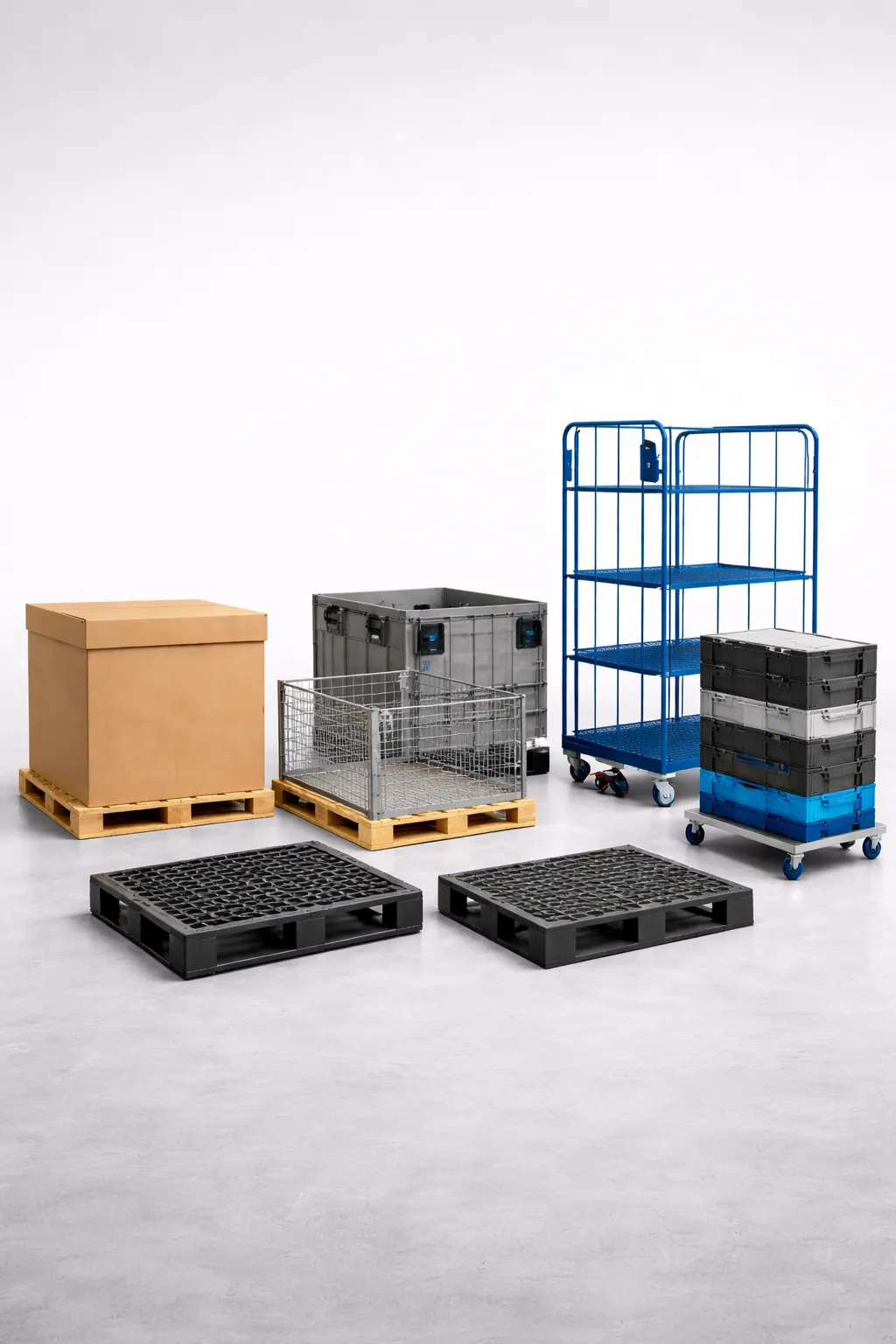
Heterogeneous goods and load carriers
Do you want to optimize homogeneous, layer-based, or mixed pallets and load carriers with software while accounting for real requirements from warehouse, shipping, and transport?
If load units need to work not only mathematically but also in day-to-day operations, you need optimization that connects warehouse, shipping, and transport in one logic.
Learn more about 3D packing, load planning, and transport optimization for connected logistics processes.
Assess in a structured way where the biggest levers lie across pallet building, shipping, and loading.
Let us talk about how your pallet building can become more stable, more efficient, and more practical in day-to-day operations.